
Mid-Size Solar Projects Wait Nearly Four Years for U.S. Grid Connection, Berkeley Lab Study Finds
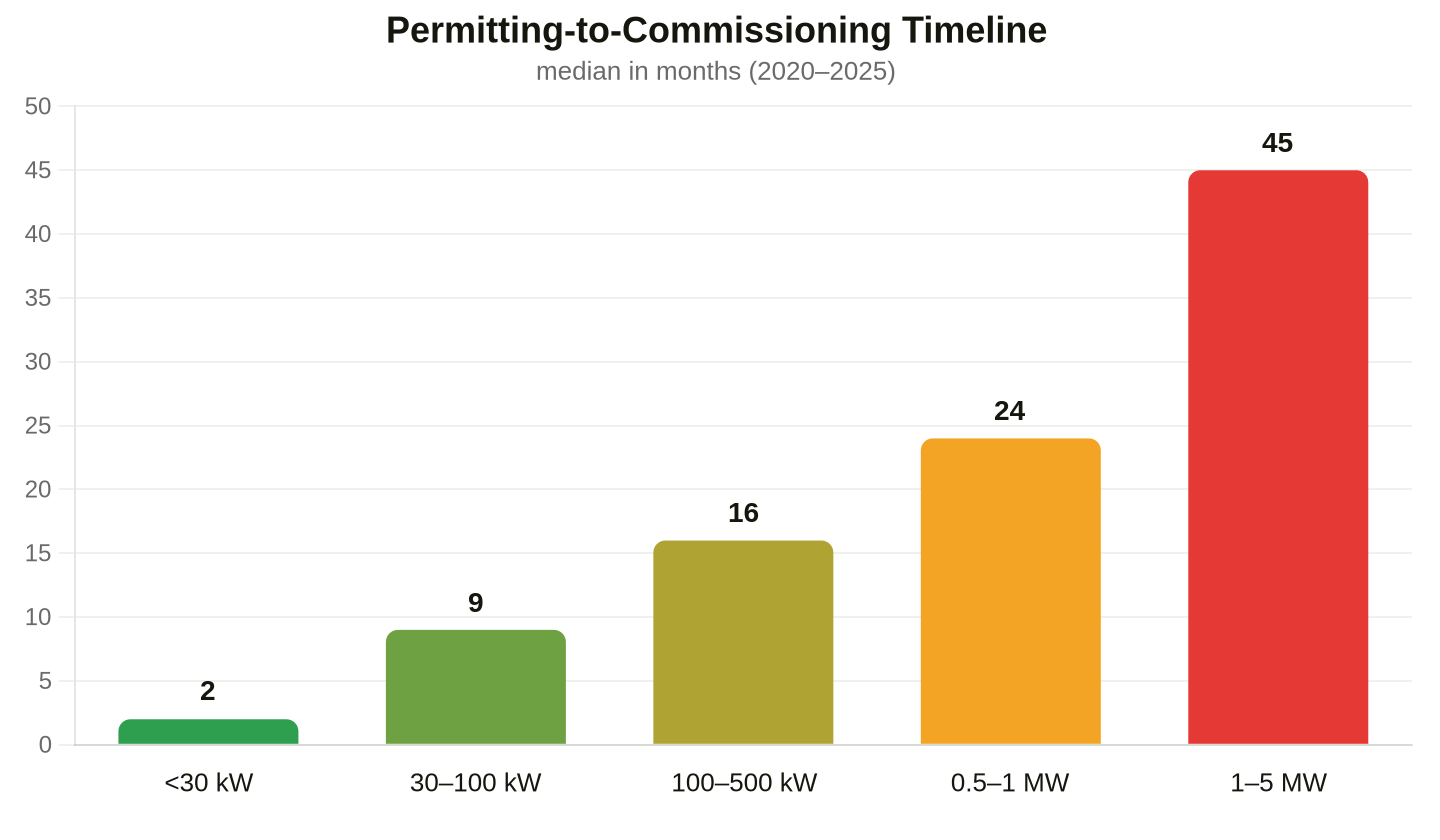
Solar installations in the 1–5 megawatt range face a median wait of 45 months before receiving grid interconnection approval in the United States — more than twenty times longer than the roughly two months it takes for residential rooftop systems under 30 kilowatts, according to a new Berkeley Lab report.
The study drew on 2.7 million interconnection applications filed with 188 utilities across 24 states, covering more than 77.5 gigawatts of solar capacity. Its central finding is that project scale is among the strongest predictors of both delay and attrition: among systems larger than 100 kilowatts, 76 percent had not received permission to operate by the end of the study period, compared with just 8 percent of small residential systems.
Geography adds another layer of variation. For systems below 50 kilowatts, the median approval timeline runs 2.3 months in Washington state but stretches to 6.4 months in Massachusetts.
Contract-signing times did improve — falling by 26 percent — yet inconsistent utility reporting limits what can be concluded from that trend. Comparing grid-upgrade costs, which can reach $383 per kilowatt, across different parts of the country remains difficult because more than 99 percent of available cost data comes from a single state, New York.
The broader context underlines the stakes: roughly 2,061 gigawatts of generation capacity currently sit in bulk interconnection queues across the United States, making queue reform one of the most consequential bottlenecks for the country’s clean-energy build-out.
Source: PV Magazine USA
Become a member of 100 RE UA
Switching to 100% renewable energy in Ukraine is possible!