

Europe’s Plug-In Hybrids Charge Rarely, Emit Often — T&E Calls for Tax Rethink
Plug-in hybrid vehicles run on electricity only 27% of the time in everyday use, according to a Transport & Environment analysis of 2024 data — raising sharp questions about whether the technology deserves the same fiscal treatment as fully electric cars.
The report found that real-world carbon emissions from PHEVs diverge significantly from laboratory WLTP figures. Long-range variants — those capable of more than 70 kilometres on battery alone — show a 52% gap between test results and actual emissions, compared with 35% for shorter-range models. The disconnect stems largely from how infrequently drivers plug in: average electric range has grown from 58 km in 2021 to 75 km in 2024, but irregular charging means the combustion engine still does most of the work.
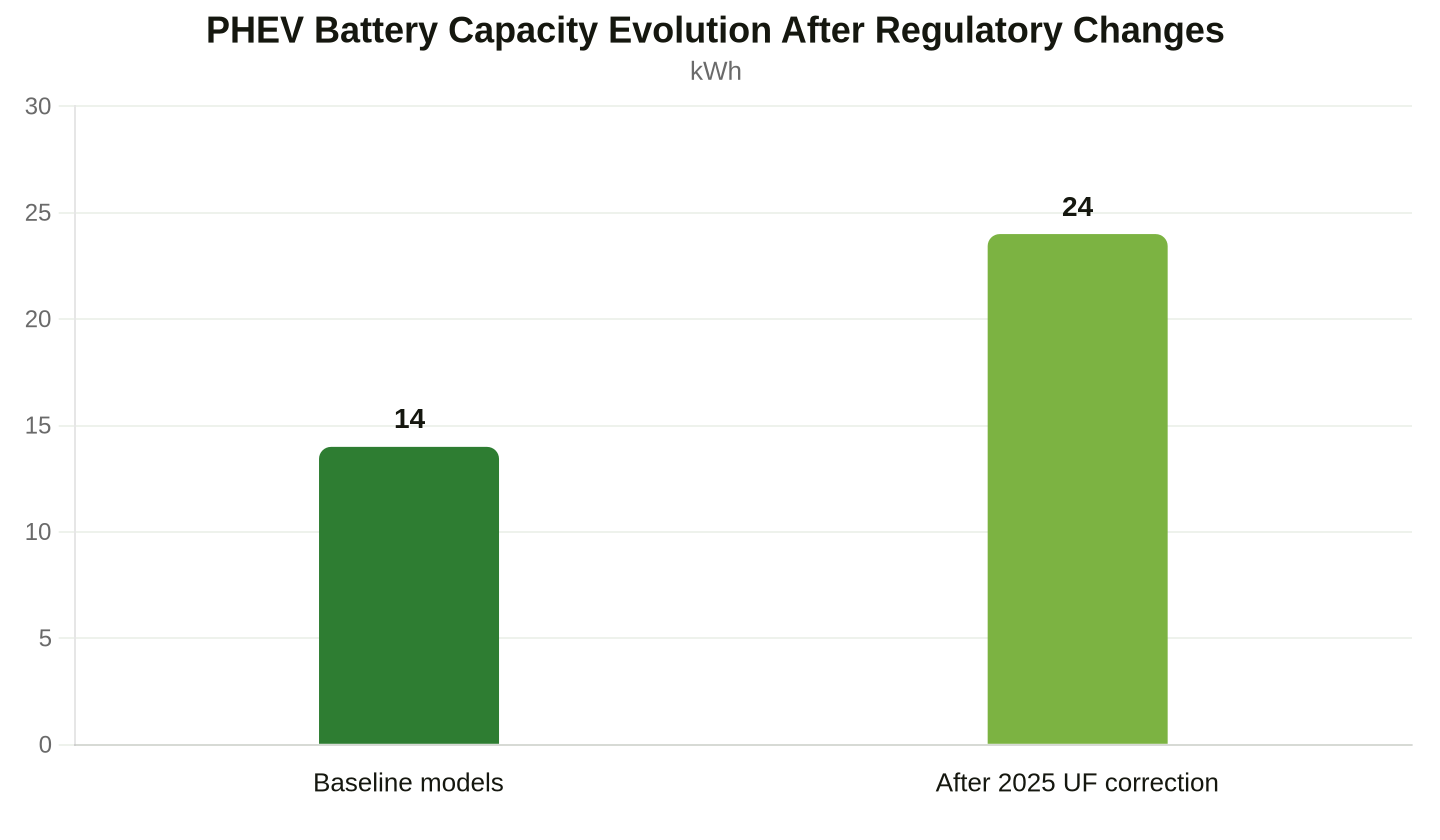
Automakers have responded to a 2025 revision of the EU’s Utility Factor methodology by boosting average battery capacity from 14 to 24 kWh — a 68% increase — lifting certified range from 63 to 117 km with a reported cost rise of just 2%. A further regulatory tightening expected between 2026 and 2027 will demand electric ranges of 140–220 km for PHEVs to remain below the 50 g CO₂/km ceiling.
The stakes are amplified by the fleet market: 71% of PHEVs are purchased by companies, not private buyers. Yet only 12 of the EU’s 27 member states apply a strict subsidy threshold of 50 g/km or below. T&E argues that ongoing policy flexibility effectively channels public money toward vehicles that burn fossil fuel the majority of the time, and urges governments to realign tax incentives with actual emission performance.
Source: CleanTechnica
Become a member of 100 RE UA
Switching to 100% renewable energy in Ukraine is possible!