US Set to Add More Than 1 TW of Solar, Wind and Storage by 2036
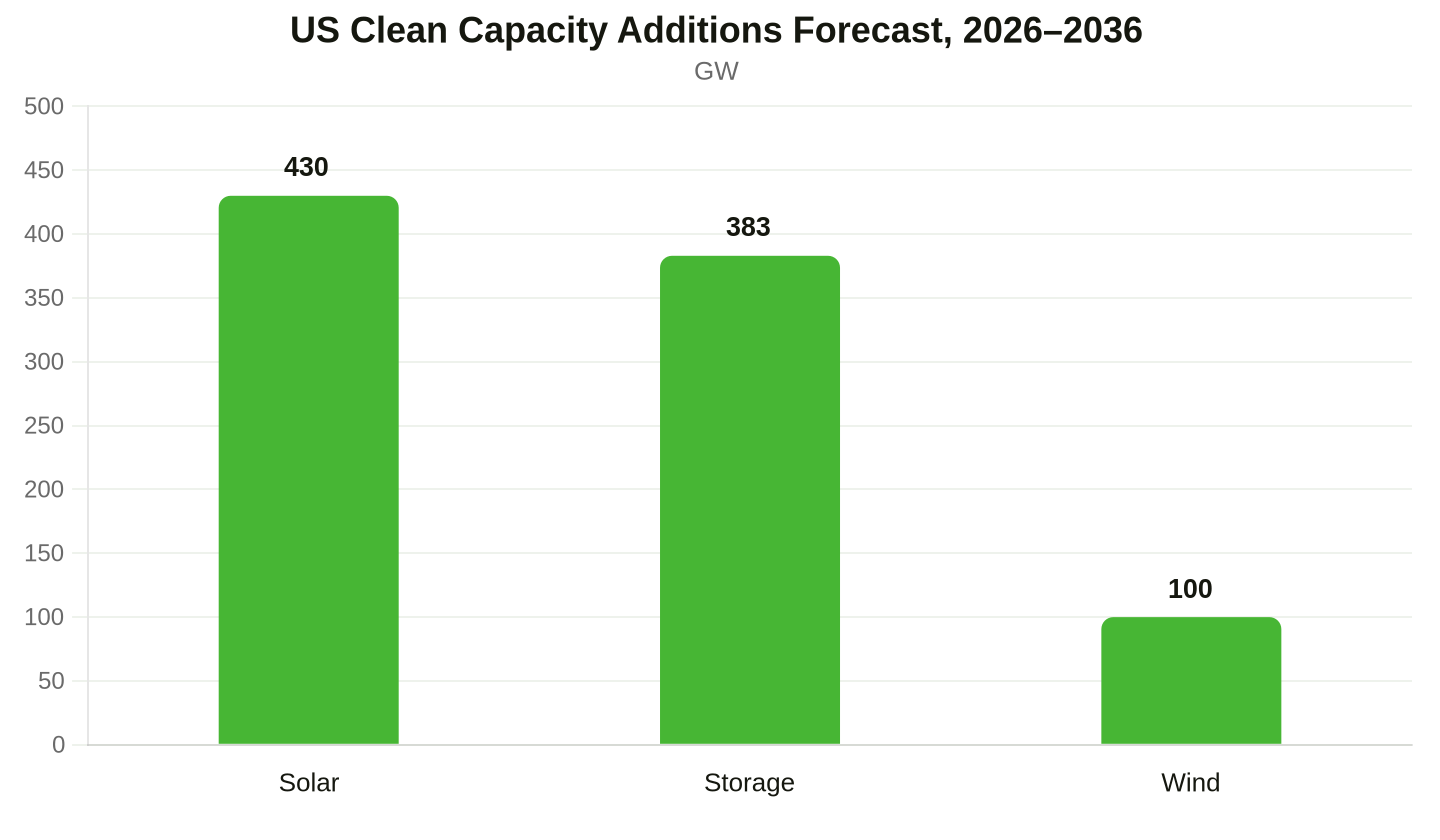
The United States is on track to add more than one terawatt of new solar, wind and energy storage capacity between 2026 and 2036 — a build-out that would more than double the country’s combined fleet of those three technologies from its level at the end of 2025, according to a forecast by BloombergNEF.
The research organisation identifies data-centre power consumption as one of the key drivers, projecting that installed data-centre capacity will climb from 47 GW in 2025 to 194 GW by 2035 under a base scenario. BNEF expects two consecutive record years for new additions: 89 GW in 2026 followed by 93 GW in 2027.
That pace rests on a sizeable pipeline: wind and solar projects that started building before the 4 July cut-off preserved their eligibility for federal tax credits. BNEF’s optimistic safe-harbour case puts US credit-eligible solar and wind capacity above 250 GW in the pipeline. Financing risk persists while the sector waits for final guidance on the prohibited foreign entity (PFE) rules, which cap the use of equipment linked to designated countries, China among them, in projects that claim tax credits.
The revised outlook shifted considerably across segments compared with BNEF’s May report:
- Energy storage: 383 GW expected over 2026–2036, up 34% from the prior estimate
- Onshore wind: revised up 15% to 100 GW
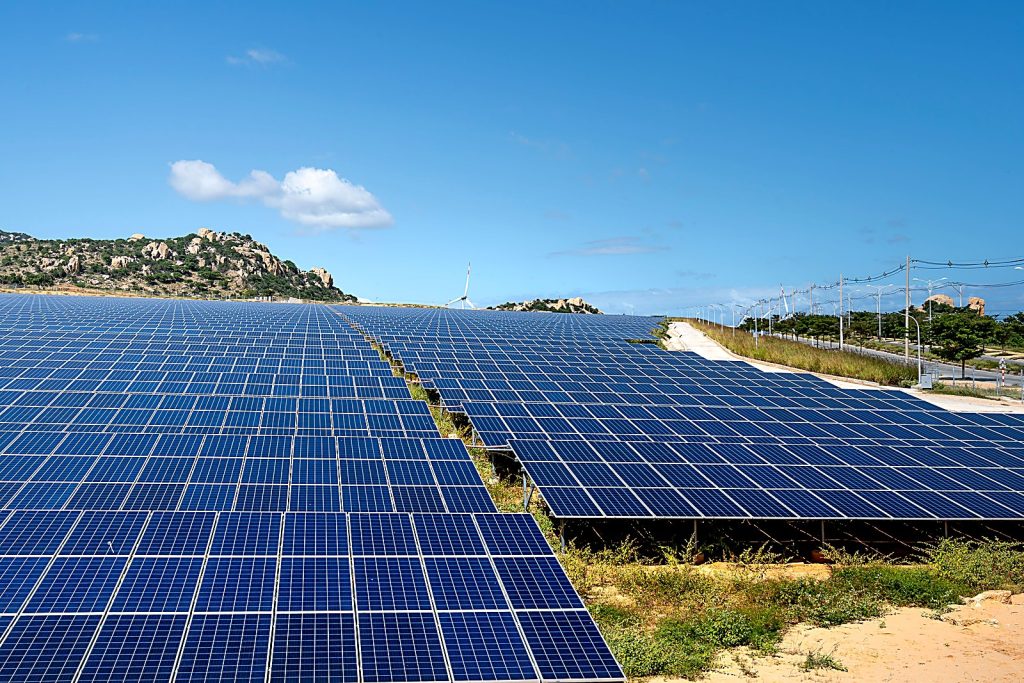
- Utility-scale solar: cut 7.5% to 430 GW as new solar-specific import tariffs undercut project economics
Clean technologies also face competition from on-site gas generation at data-centre sites. BNEF counted 165 GW of announced on-site gas projects at US data centres, noting that gas currently wins on both speed and cost where data centres demand very high availability, while clean firm alternatives, nuclear and small modular reactors among them, carry far longer development timelines. The gas pipeline remains uncertain — many projects have no confirmed commissioning date or identified equipment suppliers, and many of these gas installations will still need batteries for redundancy and efficiency, and to ride through the demand swings that AI workloads create.
Source: BloombergNEF
Become a member of 100 RE UA
Switching to 100% renewable energy in Ukraine is possible!