

How Draft Law No. 13219 Restarts ESCO Solar Investment and Strengthens the Resilience of Water Utilities
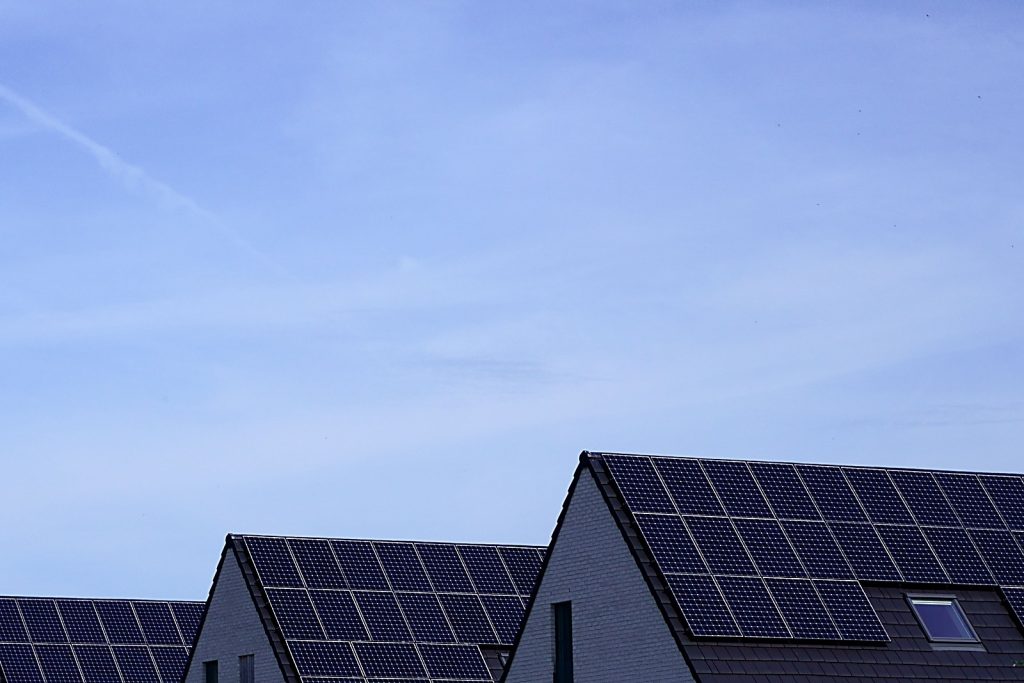
In 2023–2025, Ukrainian Association of Energy Service Companies, together with UNDP Ukraine, helped municipalities implement solar power plants (and, in some solutions, battery energy storage) on critical infrastructure—particularly water utilities—through the ESCO mechanism.
This approach addresses two practical constraints at once: limited municipal CAPEX and the urgent need for energy resilience. Under the ESCO model, private investors finance design, construction, and commissioning, while the facility repays investment from verified savings over time. In a UNDP programme update, the project reported that during 2023 it conducted a large-scale assessment of the potential for solar at water facilities and hospitals and developed preliminary feasibility studies for 48 projects across more than 20 partner cities.
A later UNDP “lessons learned” report also quantifies this pipeline: 48 ESCO–Solar Power Plant projects for hospitals and water utilities in 29 cities, with a total value of UAH 658 million and 6.5 MW referenced within the programme context.
What happened on 10 February 2026
On 10 February 2026, Verkhovna Rada of Ukraine adopted Draft Law No. 13219 (“On Amendments to Certain Laws of Ukraine to Improve Competitive Conditions for Electricity Production from Alternative Energy Sources”). The parliament’s press service summarized key provisions, including extending “green” auctions to 2034 and introducing/expanding support tools and market instruments.
The roll-call voting page for the adoption is available in the parliamentary voting system.
The bill’s official card (legislative tracking) provides procedural context and references to related resolutions in its history.
Why this matters for water utilities and ESCO investment
For water utilities, electricity is among the largest operating cost items, and outages directly threaten continuity of essential services. Distributed solar reduces exposure to market volatility and peak demand, while storage adds operational continuity during interruptions.
A practical example is described by State Agency on Energy Efficiency and Energy Saving of Ukraine in a case story about a water utility solar facility: it notes that an installed energy storage system can power equipment for up to one hour during outages, and the solar plant has generated about 40,000 kWh per month on average, covering around 50% of the utility’s monthly need (the story also references annual substitution figures).
The “rules of the game” problem ESCO projects run into
In regulated/tariff environments, ESCO financing depends on one thing more than anything else: predictable, legally bankable cashflow from measurable savings. When regulations treat savings from on-site renewable generation ambiguously (even if the technical and economic effect is obvious), investment risk spikes and projects can stall.
This is why stakeholders describe Draft Law No. 13219 not merely as a formal update, but as a signal that systemic barriers can be removed through coordinated work between the market, municipalities, and partners—and that long-term projects can become financeable again.
At the same time, it is important to recognize that Draft Law No. 13219 is a “package” reform, and implementation details (and, in some areas, secondary regulation/clarifications) will largely determine how quickly investment pipelines restart on the ground.
Global 100 RE Ukraine’s position: predictability first
Global 100 RE Ukraine publicly commented on Draft Law No. 13219 from the perspective of sector-wide investment predictability—warning that some proposed changes create systemic risks for producers of renewable heat (including biomass and other alternative energy sources). In its published position, the organization stresses that removing incentive tariff mechanisms reduces investment predictability and can complicate new projects—ultimately slowing the replacement of natural gas in heating.
For municipalities, this message translates into a simple principle: first trust (stable, transparent rules), then scale (projects, megawatts, resilience). The ESCO market logic is the same—if the rules are consistent and savings are recognized, private capital can modernize critical infrastructure faster and without direct budget pressure.
What Draft Law No. 13219 can unlock in practice
If the new framework is implemented consistently, municipalities and investors can expand solutions that simultaneously:
-
reduce operating costs for critical infrastructure;
-
build local generation at the point of consumption;
-
improve resilience through solar + storage configurations;
-
enable modernization without upfront municipal CAPEX, using private investment repaid from verified savings.
Become a member of 100 RE UA
Switching to 100% renewable energy in Ukraine is possible!