
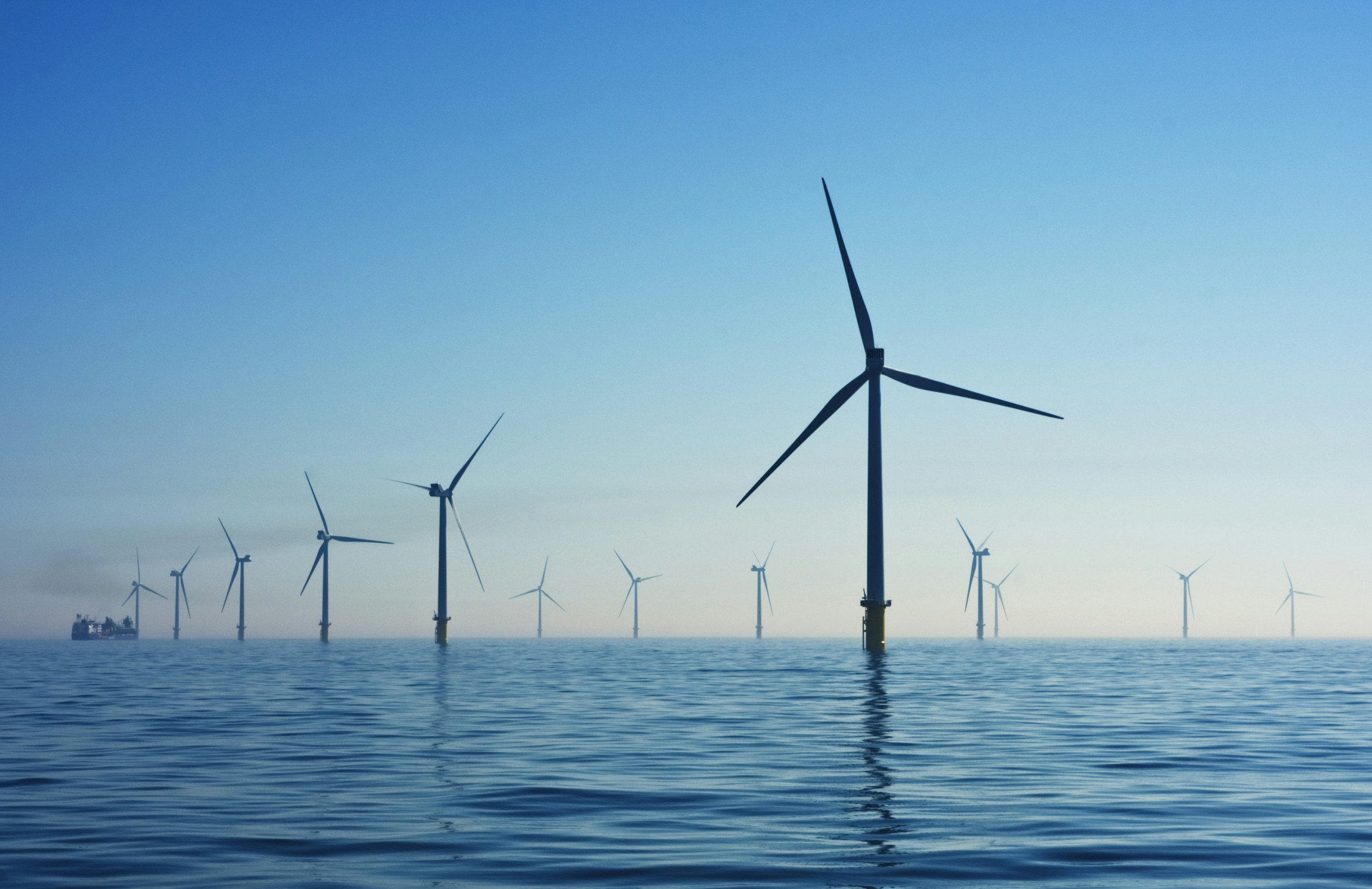
IEA’s Electricity 2026: The “Age of Electricity” is accelerating — and wind is becoming Europe’s backbone
The International Energy Agency has captured a major turning point in its new report Electricity 2026: the world is entering the “Age of Electricity” — a period when electricity becomes the core “currency” of the economy and demand growth reaches a new scale.
Covering the years 2026–2030, the IEA outlook shows that renewables, grids, and flexibility (energy storage, demand-side response, and new connection rules) will define countries’ competitiveness and energy security in the coming decade.
Electricity demand is set to grow faster than at any time in recent decades
The IEA projects that global electricity demand will grow by an average of 3.6% per year in 2026–2030 — around 50% faster than the average growth rate of the previous decade.
A key shift is that electricity consumption is starting to “decouple” from historical GDP patterns: by 2030, electricity demand is expected to grow at least 2.5 times faster than total energy demand. This is one of the clearest markers of the “Age of Electricity”.
What is driving demand upward:
-
industrial electrification
-
electric transport
-
cooling and air conditioning
-
data centres and the digital economy
By 2030, 50% of global generation will come from low-carbon sources
The IEA expects the share of low-carbon sources (renewables + nuclear) to rise to 50% of global electricity generation by 2030 (up from 42% in 2025).
Within the growth mix, solar will play the biggest role:
-
solar generation adds more than 600 TWh per year on average over the forecast period
-
variable renewables (solar + wind) increase globally from 17% of generation in 2025 to 27% in 2030
The implication is straightforward: systems that can integrate variable renewables quickly — through grids, storage, and updated market mechanisms — will be the ones that win both economically and structurally.
Europe: wind overtakes nuclear and becomes the EU’s largest power source
For Ukraine, the EU trajectory is a particularly important signal. According to the IEA forecast:
-
wind becomes the EU’s largest source of electricity over the forecast horizon, overtaking nuclear
-
wind’s share in the EU rises from 17% to 25% by 2030
-
average annual growth of wind generation in 2026–2030 is around 10% per year
In parallel, the EU renewable share in power generation increases to 63% by 2030 (from 48% in 2025), while the share of variable renewables (solar + wind) rises to 46% by 2030 (from 30% in 2025).
In other words, Europe is moving toward a system where wind is no longer an “add-on” — it becomes a core system-forming pillar.
Grids remain the main bottleneck of the transition
The biggest constraint is not a lack of generation technology — it is a lack of grid capacity.
The IEA highlights several structural challenges:
-
over 2,500 GW of projects (renewables, storage, and major new loads) are stuck in grid connection queues worldwide
-
to meet projected demand, annual grid investment needs to grow by around 50% by 2030, from the current level of roughly USD 400 billion per year
-
grid build-out often takes 5–15 years, while renewables, data centres, and charging infrastructure can scale much faster
A key practical conclusion from the IEA is that beyond “concrete and steel”, the system needs regulatory solutions that enable faster connections and better use of existing networks — including more flexible connection rules and technologies that increase grid capacity.
What this means for Ukraine: practical priorities for 2026–2030
Wind is a strategic asset for integration with the EU power market
If wind becomes the “electric foundation” of Europe, then Ukrainian wind power gains a clear long-term logic: sustained demand, a defined role in the balance, and continued investor interest — provided Ukraine aligns rules with the EU and removes grid constraints.
Grids and connections are the main front of state policy
Connection queues and limited transmission capacity increasingly determine whether investment interest turns into real megawatts on the ground.
The “wind + storage + grids” triangle is the new energy-security standard
As variable renewables rise toward 2030, flexibility becomes a basic requirement rather than an optional feature — storage, demand response, and flexible markets/ancillary services.
For Ukraine — under wartime conditions and during recovery — this simultaneously means:
-
higher system resilience
-
lower risk of shortages and peak-hour stress
-
a foundation for new renewable investments without “getting stuck” at the connection stage
Conclusion
The IEA’s Electricity 2026 makes one message clear: future competition in power systems is not only about who builds generation faster — it is about who can expand grids and flexibility faster. And for Europe, wind is becoming a key system-forming technology by 2030 — a direct strategic signal for Ukraine.
Become a member of 100 RE UA
Switching to 100% renewable energy in Ukraine is possible!