
Germany is preparing “green gas” for heating — and directly names Ukraine as a potential biomethane supplier
After a heated public debate around Germany’s “Heating Act,” Berlin is moving toward a new model: instead of a strict 65% renewables requirement for new heating systems, the focus shifts to technology flexibility (including the option to install gas boilers) — but with a mandatory, gradual transition toward climate-friendly fuels.
In this context, Germany’s Minister for Economic Affairs and Energy Katherina Reiche has publicly pointed to Ukraineas a country capable of supplying significant volumes of biogas/biomethane, noting that regulatory barriers still exist between Ukraine and the EU — but once these are resolved, Germany expects a substantial increase in biomethane imports.
This is a strong signal: a major European heat market (where gas still plays a central role) is starting to look for “gas” not underground — but on farms and in the bioeconomy.
What Germany is changing: from “65% renewables” to “green gas quotas”
According to public reporting by international media, Germany’s updated approach includes:
-
scrapping or easing the previous rule that most new heating systems must provide at least 65% renewable energy;
-
allowing gas and oil heating systems, but requiring an increasing share of climate-friendly fuels over time (with biomethane frequently cited among the options);
-
a quota-type logic: sources describe benchmarks such as at least 10% climate-friendly fuel from 2029, with stepwise increases through 2040.
At the same time, parts of the climate and expert community criticize this model as a risk of “fossil lock-in” — because low-carbon gases may remain scarce and expensive, potentially slowing down electrification via heat pumps. Still, if demand is created through quotas, certified biomethane suppliers may gain a fast route to market.
Ukraine in Berlin’s narrative: why this matters
The key point is not only the policy debate inside Germany. It is that Germany is effectively signaling: gas heating may remain — if the gas becomes greener.
In the statements cited by media, Minister Reiche emphasizes that biomethane is already available and can be scaled as a market product where demand exists. She also underlines that Ukraine can provide large volumes, even though regulatory barriers are still a limiting factor. Once those barriers are removed, Germany expects the import market to expand.
Ukrainian biomethane is not hypothetical: exports to the EU have already started
Ukraine has already moved from discussion to first deliveries:
-
official communications reported the start of biomethane exports to the EU, including a first pipeline shipment in 2025;
-
companies in Ukraine have publicly highlighted early cases of supplies toward Germany;
-
industry media has published estimates of aggregated export volumes by Ukrainian companies during 2025.
This means the baseline “Ukraine can supply biomethane” is already supported by real export precedent. The next challenge is scaling — through certification, registry compatibility, and predictable access to the EU market.
What slows scaling: key Ukraine–EU barriers
Public sources most often group the barriers into three categories:
-
Certification and EU compliance (RED II/RED III framework)
The EU market does not buy “just gas.” It buys a molecule with verified origin and verified climate benefit(traceability, sustainability criteria, greenhouse-gas reduction, auditability, mass balance, etc.). -
Registry interoperability and proper accounting for “green molecules”
A separate, highly practical issue is how biomethane is recorded and transferred across systems — including guarantees of origin and reliable bookkeeping. -
Regulatory alignment between Ukraine and the EU
This includes procedures, mutual recognition of schemes, network rules, documentation, and audit requirements — exactly the kind of “barriers” referenced in the German minister’s remarks.
Why Germany’s heating market is strategically important for Ukraine
Germany is one of the largest heat markets in the EU. If biomethane demand is embedded in national rules (via quotas or climate-friendly fuel obligations), it sends a long-term investment signal: to expand biomethane production, certification capacity, infrastructure, and export contracting.
In practice, the reform logic implies: gas systems remain acceptable only if the fuel becomes progressively more climate-friendly. Among the near-term options, biomethane is often seen as the most scalable “green gas,” compared to hydrogen which requires heavier infrastructure transformation.
What this means for Ukraine: a new opportunity for agriculture and municipalities
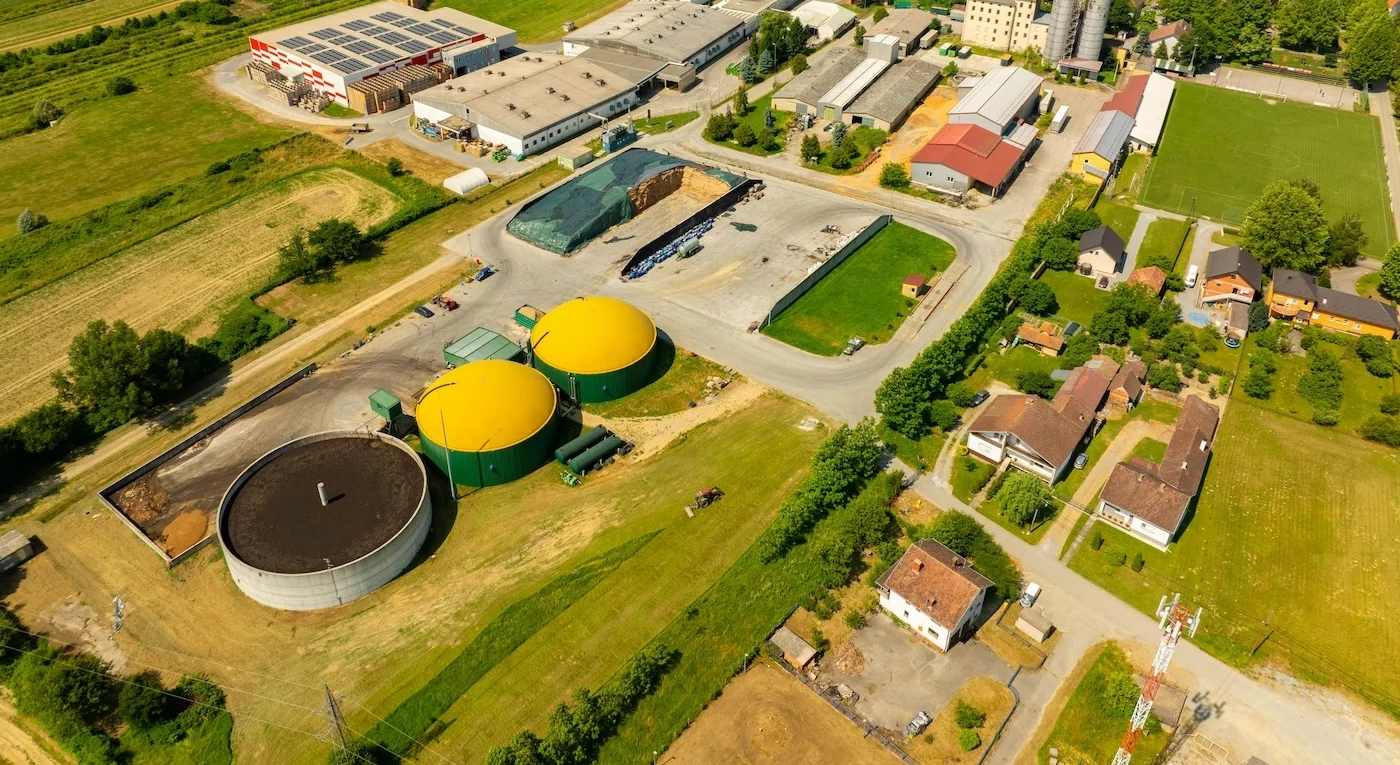
Biomethane is produced from organic feedstocks that are often treated as a cost or a waste problem:
-
manure and livestock waste,
-
poultry litter,
-
organic residues and agro-industrial by-products,
-
food industry organic waste.
For Ukraine, this opens a realistic “triple benefit” pathway:
-
Exports and hard-currency revenue (a new energy export category linked directly to EU decarbonization)
-
Decentralized energy security (local production supporting heat and critical infrastructure resilience)
-
Environmental impact (better organic waste management and methane emission reduction), provided the technology and control systems are implemented properly.
What needs to happen for the opportunity to become a market
To convert the “window of opportunity” into a working export market, actions must be synchronized across the state, business, and communities.
For the state and regulator
-
finalize and ensure international recognition of certification and accounting mechanisms compatible with EU requirements;
-
develop/align biomethane registries with EU practices (guarantees of origin, mass balance);
-
provide transparent, predictable rules for grid access and export logistics.
For business
-
invest in certified biomethane (not only on-site biogas use);
-
prepare for audits and contracts: feedstock traceability, accounting, reporting, and emissions-reduction proof.
For municipalities and communities
-
integrate biomethane/biogas solutions into local energy resilience and heating plans;
-
build partnerships with agricultural producers and municipal utilities around organic waste streams and logistics.
Conclusion
Germany’s heating reform — allowing gas systems while tightening requirements for climate-friendly fuels — is structurally creating demand for biomethane. In this context, public German statements about potential imports from Ukraine are more than a diplomatic phrase: they are a market signal.
Ukraine already has export precedents, but the ability to scale depends on certification, registry interoperability, and the removal of regulatory barriers between Ukraine and the EU.
Energy is increasingly a security issue. Biomethane is one of the markets being shaped right now — and Ukraine can become part of the solution.
Become a member of 100 RE UA
Switching to 100% renewable energy in Ukraine is possible!