

Battery Inverters Take on Grid-Stability Roles as Thermal Plants Retire
Power grids are losing something that once went largely unnoticed: the physical inertia of large spinning turbines. For decades, that rotational mass acted as a natural buffer against sudden frequency swings. As coal and gas plants are decommissioned, the buffer shrinks — and grids become markedly more sensitive to any generation-load imbalance. Engineers at ABB have flagged this as one of the defining challenges of the energy transition.
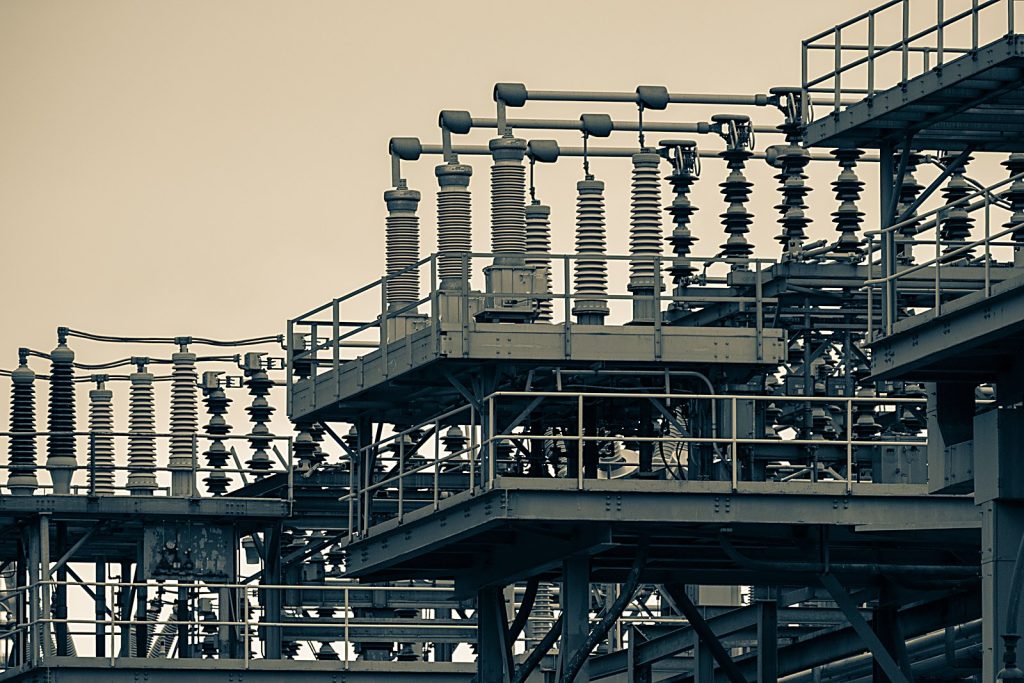
Historically, grid operators relied on synchronous generators and synchronous compensators to supply inertial mass and regulate voltage. The expectation is now shifting to inverter-based resources, which system operators increasingly require to deliver comparable performance.
Modern battery converters can work in two distinct modes. The conventional approach treats the inverter as a current source that tracks existing grid voltage — workable under normal conditions, but unreliable in weak networks where short-circuit capacity and reactive power are limited. Grid-forming mode inverts this logic: the inverter operates as a controlled voltage source, independently establishing local frequency parameters rather than following an external reference.
That architectural shift opens up capabilities traditionally provided by synchronous plant:
- Active voltage support and stabilisation in real time
- Inertial response emulation, approximating the behaviour of large rotating machines
- Voltage formation in islanded segments cut off from the main network
- Black-start operation, restoring supply to a completely de-energised system
Black start demands an independent power source for the station’s own control and cooling systems. Once online, the grid-forming inverter creates a reference voltage that other generators can lock on to. Compared with synchronous compensators, battery systems using this inverter architecture are more flexible — and can switch between operating modes in 100 microseconds, making them an increasingly central tool for recovery after large-scale outages.
Source: pv Europe
Become a member of 100 RE UA
Switching to 100% renewable energy in Ukraine is possible!