
EcoSKILL at KhPI: how the university launched a retraining programme for IDPs to work in solar energy
In 2025, the National Technical University “KhPI” launched the EcoSKILL programme, a practical retraining course for internally displaced persons seeking to work in the solar energy sector. This is a case at the intersection of two critically important tasks for Ukraine: the rapid professional adaptation of people who were forced to relocate because of the war, and the training of new specialists for the renewable energy market, which continues to grow even amid the full-scale war.
The project is implemented by the NGO “Association of Young Scientists of NTU ‘KhPI’” with financial support from Razom Relief. Its idea is not only to provide participants with new knowledge, but also to create a real pathway into a new profession — from training and hands-on practice to first employment or even launching their own business in the solar energy sector.
The EcoSKILL project, implemented at the National Technical University “KhPI,” became one of the winners of the 100 gREen AWARD-2025, an award that recognizes the best implemented green transformation projects in Ukraine. This case was distinguished as an example of how education, the professional adaptation of internally displaced persons, and the development of the solar energy market can be combined in one practical solution with long-term impact.
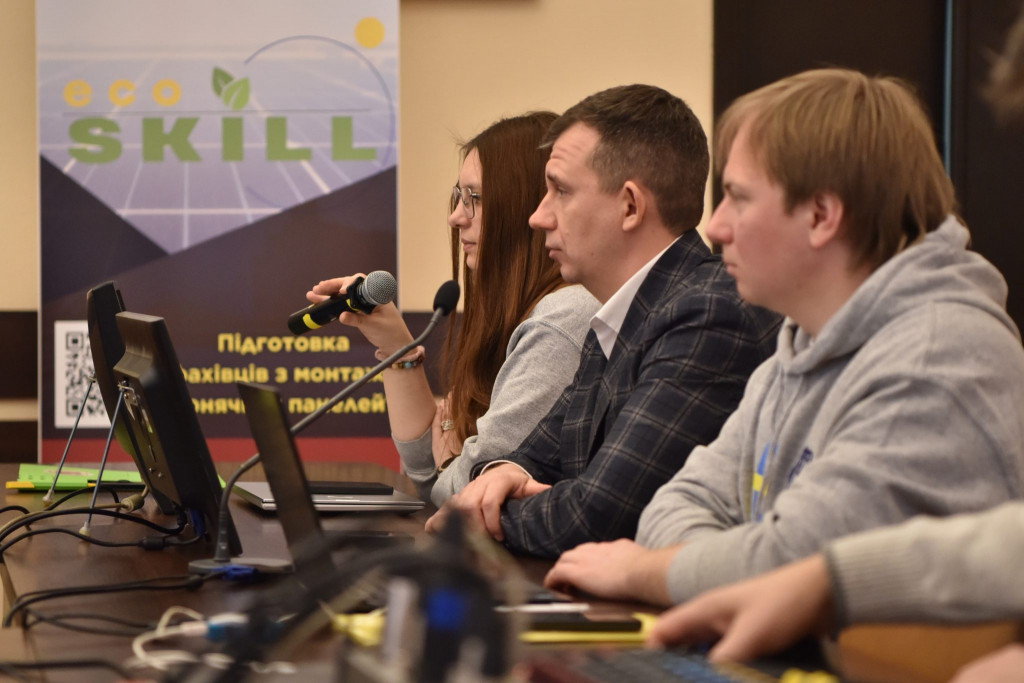
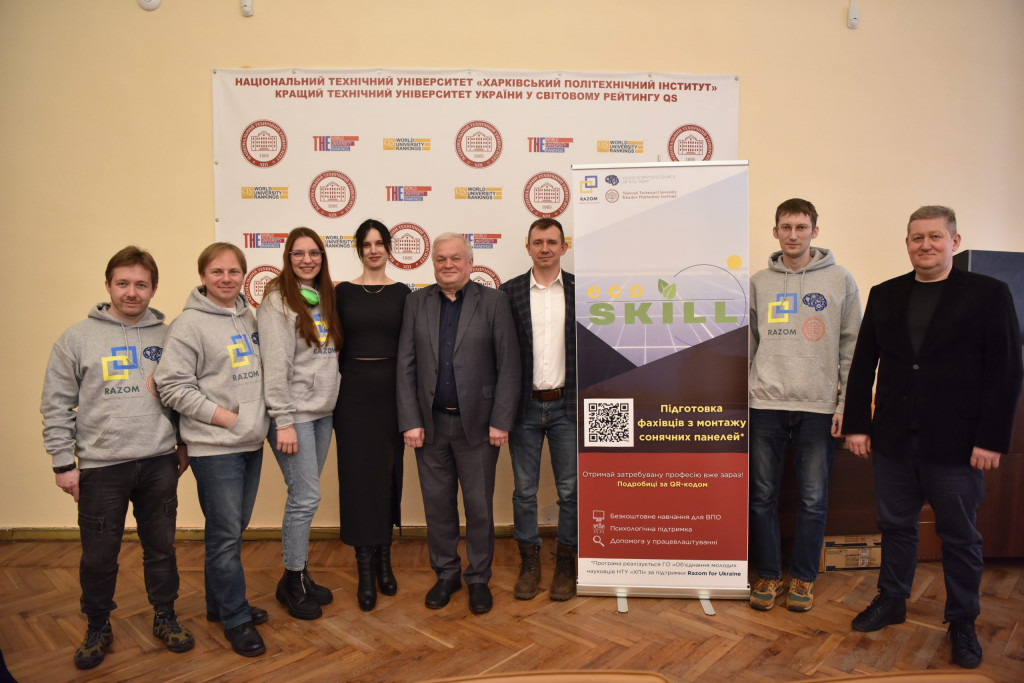
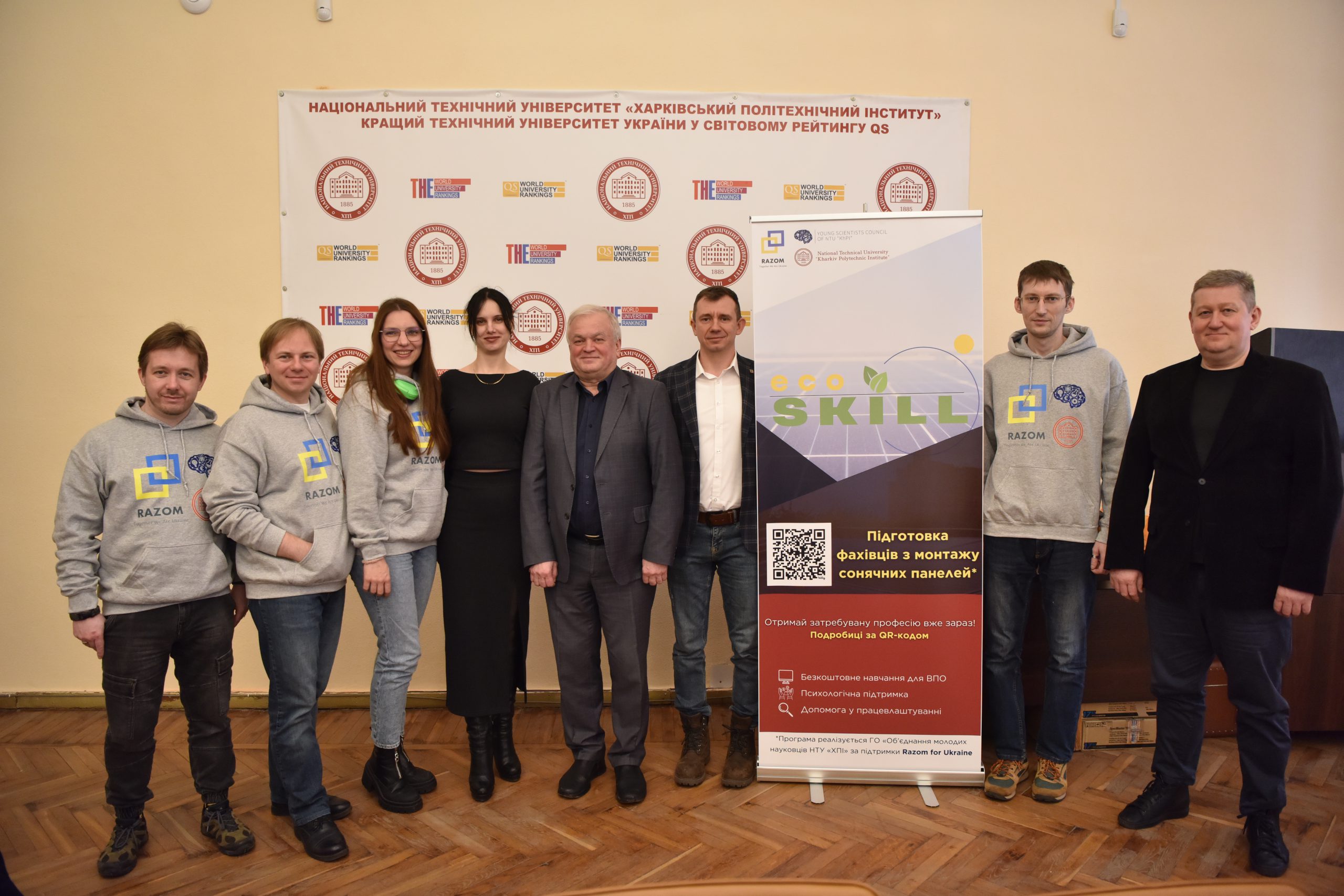
The public presentation of EcoSKILL took place in early 2025. On 6 February, a roundtable discussion was held within the framework of the project with the participation of university representatives, industry experts, and business leaders. The discussion focused on the market’s need for qualified specialists and the opportunities for rapid retraining of IDPs. By March 2025, the training itself had already started at KhPI. The university reported that the programme was designed for at least 100 participants, most of whom were internally displaced persons seeking new opportunities for professional adaptation and career growth.
The importance of this case is largely defined by its context. KhPI directly links the launch of the programme to two parallel challenges. On the one hand, Kharkiv and the region have a large number of working-age people who, because of the war, found themselves in a new life situation and in need of employment. On the other hand, the solar energy market is already facing a shortage of trained personnel, especially for the installation, maintenance, and servicing of photovoltaic systems. According to the university, Kharkiv is home to more than 100,000 working-age IDPs, of whom 20,700 require immediate employment. That is why EcoSKILL has become a response not only to an educational demand, but also to an economic and social one.
The structure of the programme shows that it was designed to be as practical as possible. Publicly available sources from KhPI and related university resources indicate that EcoSKILL includes courses on the installation and maintenance of solar power plants, practical training, business development workshops, psychological support, as well as employment assistance through job fairs. Upon completion of the training, participants receive a certificate, and the programme itself is designed not only to provide basic theory, but also to equip them with the skills to work with modern equipment and an understanding of the real needs of employers.
It is also important that EcoSKILL is not limited to a short technical course. According to KhPI’s English-language materials, the programme lasts 2.5 months, consists of five modules, combines theoretical classes, online and offline practice, and the use of modern equipment, and after the final assessment opens the way for participants to attend a Job Fair and access their first employment opportunities in the field of photovoltaic system installation. For the most motivated participants, a separate track is also provided, focused on launching their own business in the solar energy sector.
Another strong aspect of this case is that it involves not only the university environment, but also a broader ecosystem of partners. KhPI points to cooperation with the Kharkiv Volunteers Union Charitable Foundation, local employment centres, employers, and representatives of the renewable energy market. This means that from the outset the project was built not as an abstract educational initiative, but as an attempt to create a real bridge between training and employment. It is precisely this practical orientation that makes EcoSKILL especially valuable under current conditions, when Ukraine needs not only investments in energy, but also people capable of working with new infrastructure.
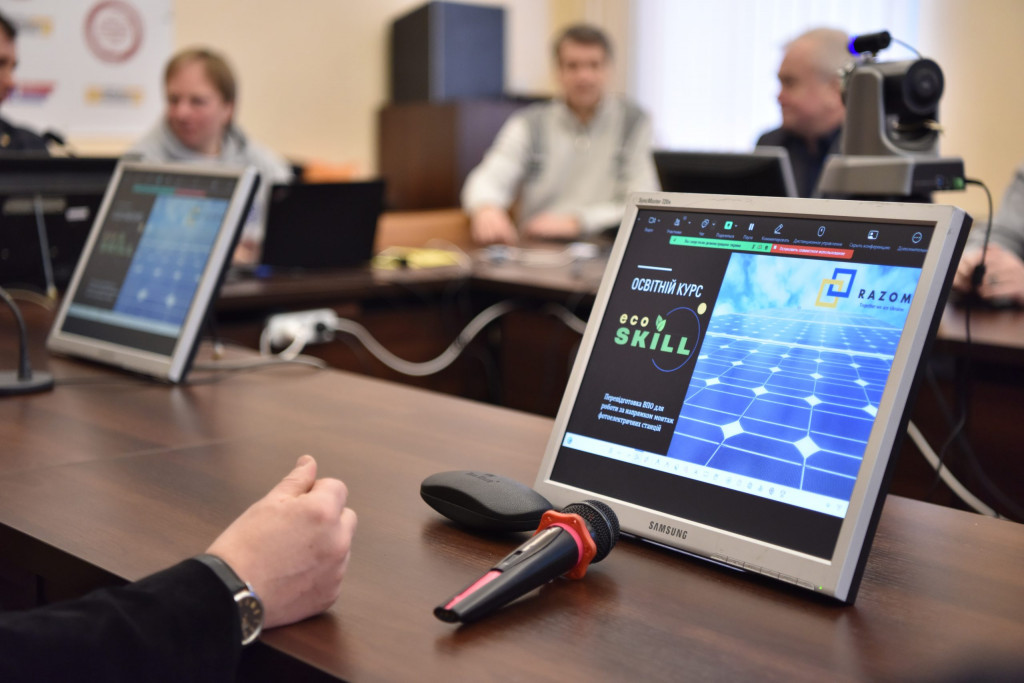
More than 100 participants have already joined the programme. This makes it possible to speak of EcoSKILL not as a symbolic pilot project, but as a scalable model that can be adapted in other regions as well. Its strength lies in the combination of university expertise, support from an international donor, demand from business, and a clear social mission. As a result, it forms not just a training course, but an instrument of green transformation that simultaneously helps people regain professional agency and strengthens the solar energy market with new specialists.
For Ukraine, this case is also important because it demonstrates that green transformation is not only about building new generation facilities or purchasing equipment. It is also about people, their retraining, new career paths, and the creation of a human capital base for the future energy transition. That is why EcoSKILL at KhPI is an example of a project working at the intersection of education, the labour market, social adaptation, and renewable energy development.
Become a member of 100 RE UA
Switching to 100% renewable energy in Ukraine is possible!