
How to Connect a Biomethane Plant to Gas Distribution and Transmission Networks in Ukraine: What Actually Works in Practice (2023–2026)
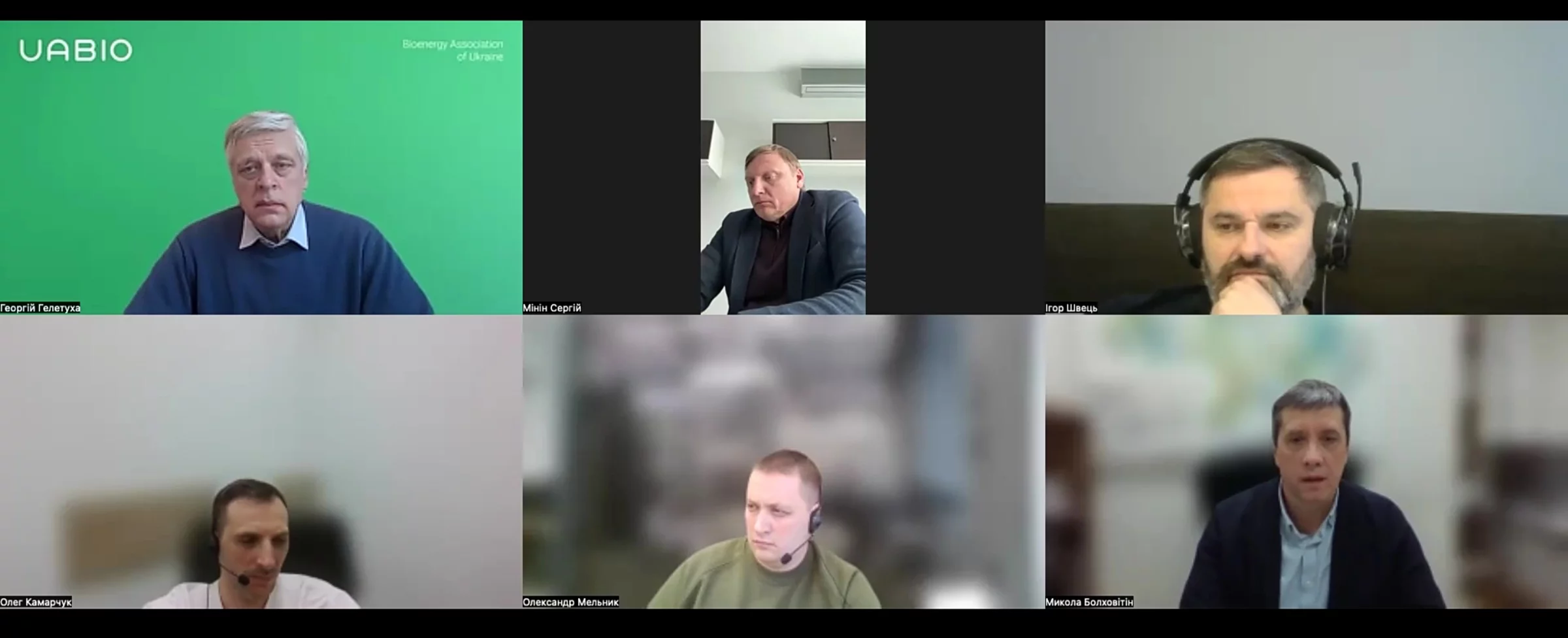
On 30 January 2026, the Bioenergy Association of Ukraine (UABIO) hosted an online event dedicated to connecting biomethane producers to Ukraine’s gas distribution (GDN) and gas transmission (GTS) networks. The discussion was highly practical: system operators, an experienced designer, and producers who have already completed the process explained the real path — from the first application for technical conditions to the physical injection of gas into the network.
This article is a hands-on guide for investors and developers. It explains what must be considered before the design stage, where projects most often get stuck, which requirements are critical for biomethane export, and why in many cases a phased approach — biogas first, biomethane later — is economically and technically justified.
The Reality Check: Many Applications, Few Projects in Progress
Representatives of the Gas Transmission System Operator of Ukraine shared revealing statistics:
-
33 applications from biogas and biomethane producers were submitted in 2023–2025
-
only 7 projects moved forward to the stage of issued technical conditions
-
total declared capacity under issued TCs: 11,000 m³/h (approx. 96 million m³/year)
-
two design packages have already been approved
-
one biomethane producer is physically connected to the GTS and preparing for gas injection
The key conclusion is clear: the main barrier is not biomethane production technology itself, but project preparation quality — documentation, land issues, routing, design solutions, and the ability to pass regulatory procedures without repeated revisions.
Where to Connect: GDN or GTS — and When a “Non-Standard” Scheme Is Needed
1. Direct connection to the GTS
The GTS connection process is strictly regulated by the Gas Transmission System Code. The operator applies a centralized “single-window” approach: consultations, issuance of technical conditions, contracts, and technical agreements are handled centrally, while regional units are involved later — for site inspections, crossings, and commissioning of metering units.
The general roadmap includes:
-
application and questionnaire
-
payment for technical conditions
-
issuance of TCs
-
design and submission of project documentation
-
approval of the design
-
construction, commissioning, balance demarcation, technical agreement
-
gas injection into the system
2. Connection to the Gas Distribution Network (GDN)
According to Gas Distribution Networks of Ukraine, four biomethane plants are already connected to GDNs. The most sensitive issues here are gas metering, physical-chemical parameters (PCP), and commercial commissioning, especially if the producer plans to export biomethane.
3. “Non-standard” connection: GDN → GTS
This model applies when a plant injects biomethane into the GDN, but excess volumes must be transferred to the GTS because the distribution network cannot absorb them fully.
While practical experience is still limited, both system operators confirmed that:
-
the mechanism is defined in the Codes,
-
the producer will have separate contractual relations with the GDN and the GTS,
-
technical coordination and sequencing are critical from the start.
Why Most Applications Do Not Move Forward
The GTS operator clearly identified the most common reasons projects stall:
-
incomplete application packages
-
missing annexes listed in the application
-
insufficient proof of signatory authority
-
confusion regarding land plots (plant site vs. metering/compressor site)
-
incorrect classification of facilities as “existing” or “new”
Practical advice: before submitting an application, conduct a short internal audit of documents — this alone can save months.
Gas Metering, PCP, and Chromatographs: What Really Matters
GTS perspective
The GTS does not impose specific measurement technologies. Producers and designers may choose appropriate metering solutions, provided they comply with legislation and standards valid at the date of TC issuance.
Key points:
-
direct GTS connection → one metering unit
-
GDN → GTS schemes may require two metering units
GDN perspective
If biomethane is intended for export, a flow gas chromatograph commissioned for commercial use is mandatory.
Early projects revealed common issues:
-
missing conformity declarations or certificates
-
incorrect device marking
-
improper temperature and measurement settings
-
delays in integrating chromatograph data into operator IT systems
First gas injection
Initial gas injection always starts with laboratory testing. Laboratories must measure all required parameters, not just selected ones — partial testing is insufficient.
Land Issues and Zoning: What Operators Require — and When
For issuing technical conditions, the GTS operator requires only proof of ownership or legal use of the land. Zoning is not assessed at this stage.
However, during commissioning, land designation, easements, and protection zones become critical. Without properly оформed documents, certification is impossible.
Designers emphasized that zoning changes for technological sites often must be carried out in parallel with design work.
How Long Does It Really Take?
Based on real projects:
-
technical conditions: up to 1 month
-
design documentation: ~6 months
-
long-lead equipment: 6–10 months
-
total timeline to commissioning: typically 14–18 months
Main sources of delay include land negotiations, design revisions, equipment delivery, and data integration.
Lessons from Biomethane Producers
Think in two phases
Producers emphasized that starting with a biogas plant allows:
-
validation of feedstock and process stability
-
revenue from electricity and heat
-
reduced risk before investing in biomethane upgrading and grid connection
Feedstock is not enough
Access to a grid capable of absorbing gas volumes is equally important. Often, feedstock is located in rural areas, while gas demand is concentrated near cities and industrial zones.
Final Takeaway
Connecting a biomethane plant to gas networks in Ukraine is not a single decision or document — it is a system of interlinked steps. Mistakes in land, routing, documentation, or metering can stop a project entirely.
The good news: procedures are becoming clearer, and practical experience is accumulating. The challenge: realistic timelines of 12–18 months must be embedded into business models from day one.
Become a member of 100 RE UA
Switching to 100% renewable energy in Ukraine is possible!