
War Has Turned Ukrainian Healthcare Upside Down
War has radically transformed Ukraine’s healthcare system. Hundreds of hospitals have been damaged or destroyed, thousands of doctors work in basements and bomb shelters, and attacks on the energy infrastructure have made electricity as vital as oxygen for patients.
When the power goes out, operating lights stop, ventilators shut down, neonatal incubators fail, and oxygen systems go silent. Over the past three years, reliable electricity in Ukraine has ceased to be a “technical issue” and has become the number one medical priority.
Against this backdrop, a new energy policy for the healthcare sector is taking shape — decentralized, resilient, and focused on on-site generation. It is being built by dozens of partner organizations: Ukrainian foundations, international agencies, foreign governments, and private companies.
When Electricity Becomes a Medical Service: the Zakharivka Hospital Case
Odesa region has been among the hardest hit by massive attacks. Zakharivka Multidisciplinary Hospital has become a symbol of this struggle.
Surgeries were performed in shelters, surgeons worked under portable lamps, and anesthesiologists manually ventilated patients when equipment shut down during outages.
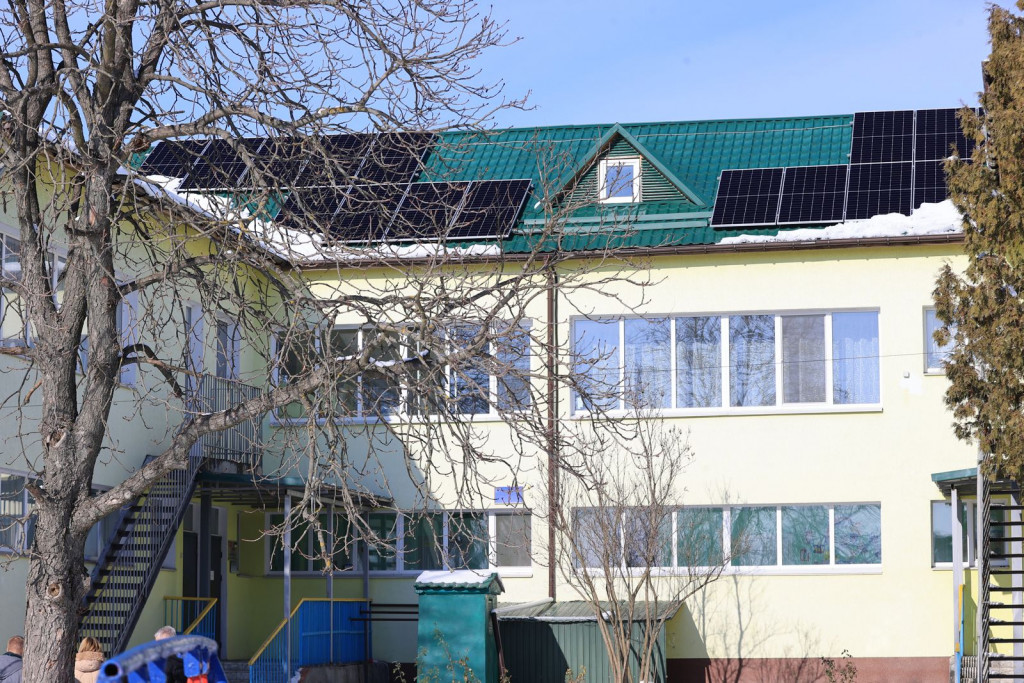
In 2025, the Energy Act for Ukraine charitable foundation installed a hybrid solar power plant at the hospital (102 panels, BESS 122.5 kWh), which:
-
provides up to 10 hours of autonomous operation for the surgical unit,
-
covers up to 27% of the hospital’s annual electricity consumption,
-
saves the hospital over €15,000 per year.
French surgeon Frank Lerman, who works at the hospital, says:
“Stable electricity is the foundation of surgery during war.”
Solar Power in Frontline Hospitals: Real Stories of Lives Saved
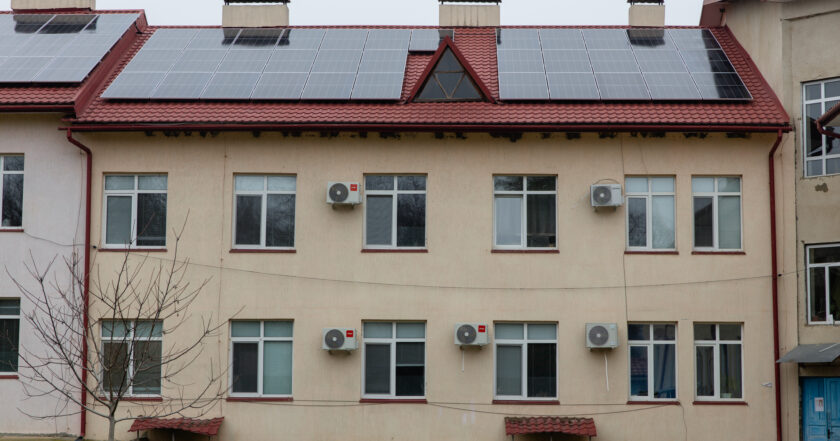
Projects by Energy Act for Ukraine have repeatedly proven their effectiveness in the most critical moments:
Kharkiv
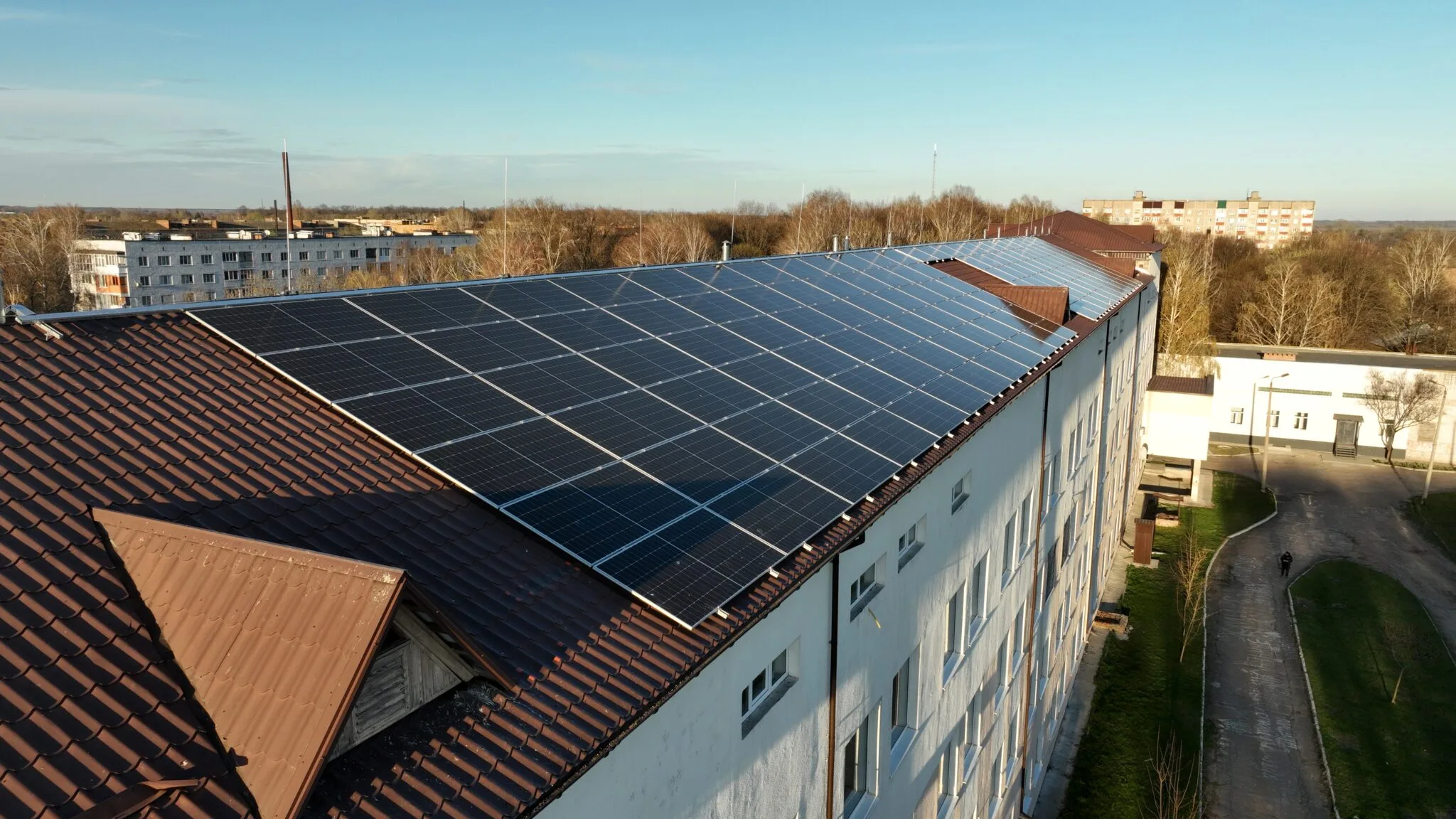
Two months after the solar plant was launched, the hospital operated for four hours entirely on solar power when the grid completely failed.
Izmail
During attacks in December 2025, the facility ran out of fuel for its generator, and the solar plant became the only source of electricity.
Mykolaiv
A solar power system at a children’s hospital made it possible to save funds and purchase 13 portable cardiographs.
These are not abstract numbers — these are saved surgeries, births, and intensive care units.
Ecoclub: Ukrainian Leadership in Building Solar Hospitals
Alongside major international donors, the Ukrainian NGO Ecoclub has become a key driver of the transition of hospitals and municipal facilities to renewable energy.
🚑 Solar Aid for Ukraine: 28+ Solar Plants for Hospitals
Ecoclub has installed or is preparing to launch more than 30 solar power plants, over 20 of them in medical facilities.
Zhytomyr City Hospital No. 2
-
20 kW — first solar plant
-
105.3 kW + 30.6 kWh BESS — second solar plant
The hospital can now power intensive care and critical departments even during prolonged blackouts.
Hospitals in Mykolaiv
Solar installations allow savings of over UAH 1.3 million annually, with funds redirected to medical equipment and repairs.
First projects in 2022
Ecoclub was among the pioneers that installed solar power plants at hospitals in Zviahel during the most severe blackout period.
International Scale: What UNDP, EIB, KOICA, Norway, and Other Partners Are Doing
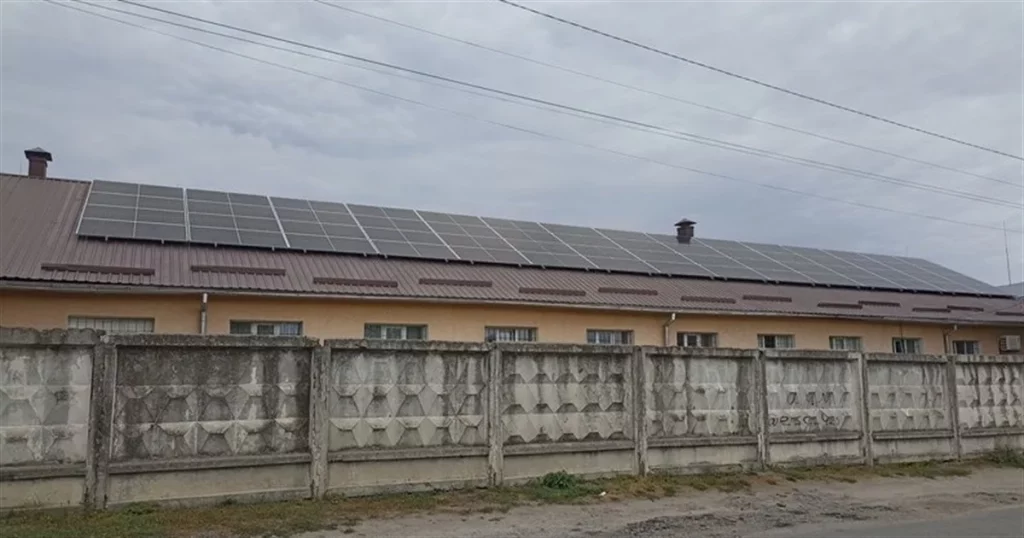
Ukraine has become a testing ground for international organizations implementing energy resilience models for healthcare.
UNDP + EIB + Ministry for Communities and Territories Development: €16.5 million for Solar and Heat Pumps
In October 2025, a two-year Renewable Energy Solutions (RES) Program was signed to install:
-
solar panels,
-
energy storage systems,
-
heat pumps
in hospitals, schools, and social facilities.
This is UNDP’s largest renewable energy program during the war.
Hybrid Solar Power Plant for Kharkiv City Hospital No. 8
In March 2025, UNDP and the Norwegian government delivered a hybrid system that provides:
-
up to 3 hours of autonomous power for critical departments,
-
electricity for oxygen systems, intensive care units, and operating rooms.
The hospital treats over 11,000 patients annually — in wartime Kharkiv, this solution is vital.
KOICA + UNDP: $14 million for Energy Resilience in Northern and Eastern Regions
The 2025 project covers:
-
Sumy, Kharkiv, Zaporizhzhia, Dnipro, and Kherson regions,
-
renewable energy solutions for 100,000 residents, including medical facilities.
This is the first large-scale Korean-Ukrainian project in energy security.
Ray of Hope Solar Program (Energy Community + EU)
The program installs solar plants in hospitals across Kyiv, Zhytomyr, Khmelnytskyi, and other regions.
Its goal is to create a network of medical facilities capable of operating even in the event of a total grid failure.
Octopus Energy + DTEK: €100 million for 100 Solar Plants in the Public Sector
In 2025, the British company and DTEK announced a fund to install:
-
solar power plants,
-
battery storage systems
in hospitals, schools, administrative service centers, and critical infrastructure.
This is the first large-scale private energy fund during the war.
Global Context: What Ukraine Does Because of War, the World Does Because of Climate
The World Health Organization warns that:
-
one in four medical facilities worldwide lacks reliable access to electricity,
-
energy shortages contribute to newborn mortality and childbirth complications,
-
sustainable energy must be part of health policy.
Other countries are already implementing similar solutions:
-
Haiti — hospitals operate up to 20 hours on hybrid solar systems,
-
India — entire states are transitioning hospitals to solar energy,
-
Africa — dozens of countries are adopting decentralized healthcare energy models.
Ukraine has become an accelerated testing ground for this global trend.
🧩 Challenges: What Slows Down Full Energy Independence for Hospitals
-
high cost of equipment and installation,
-
shortage of service engineers in communities,
-
difficulty protecting roofs and panels in shelling zones,
-
lengthy procurement and approval procedures,
-
lack of a unified national standard for hospital energy autonomy.
However, technological development and growing private investment in renewables make these solutions more affordable every year.
Conclusion: Energy Independence Is the New Medical Standard
War has forced Ukraine’s healthcare system to change — and it is changing.
-
solar power plants,
-
batteries,
-
microgrids,
-
heat pumps,
-
modernized networks
are becoming the foundation of hospital operations in the 21st century.
Ukraine is showing the world that critical infrastructure must have its own energy, and that healthcare can — and must — remain resilient under any attack.
A network of energy-independent hospitals is not just a project.
It is Ukraine’s energy rear, working when the enemy strikes hardest.
Become a member of 100 RE UA
Switching to 100% renewable energy in Ukraine is possible!