
Wind Power in Ukraine: From Survival to an Investment Breakthrough
How Notus Energy Is Testing a New Market Model and What It Means for 2026–2030
Ukraine’s wind power sector is entering 2026 in a fundamentally different position than just two years ago. While 2023–2024 were years of survival and frozen investments, 2025 marked a return to large-scale thinking — despite the war, consumption restrictions, and elevated risks.
One of the most illustrative cases of this shift is the strategy of Notus Energy in Ukraine. At the same time, it reflects broader market changes: new financing mechanisms, risk-mitigation tools, corporate PPAs, and a gradual move away from the feed-in tariff model.
2025: The Year the Market Started Moving Again
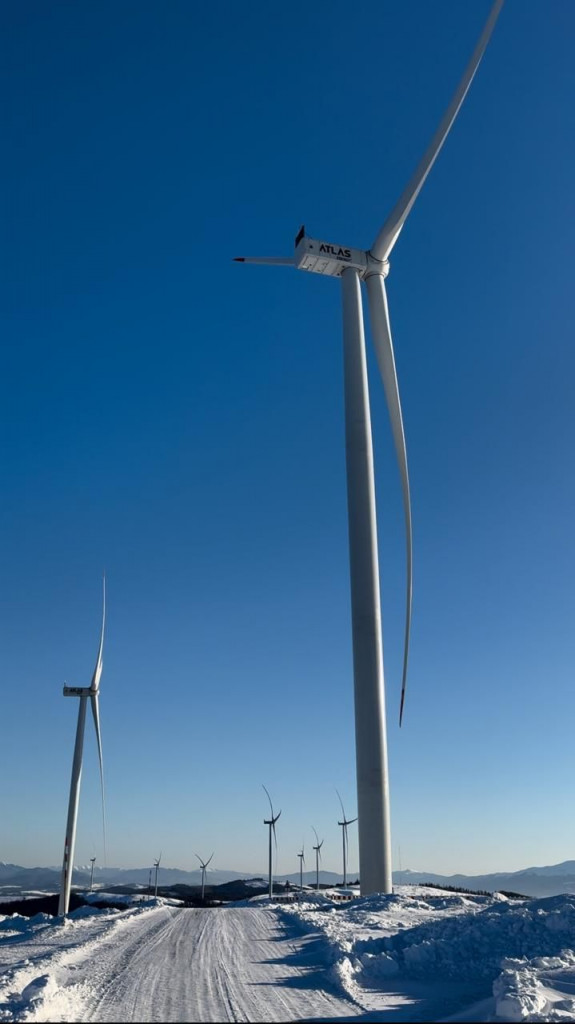
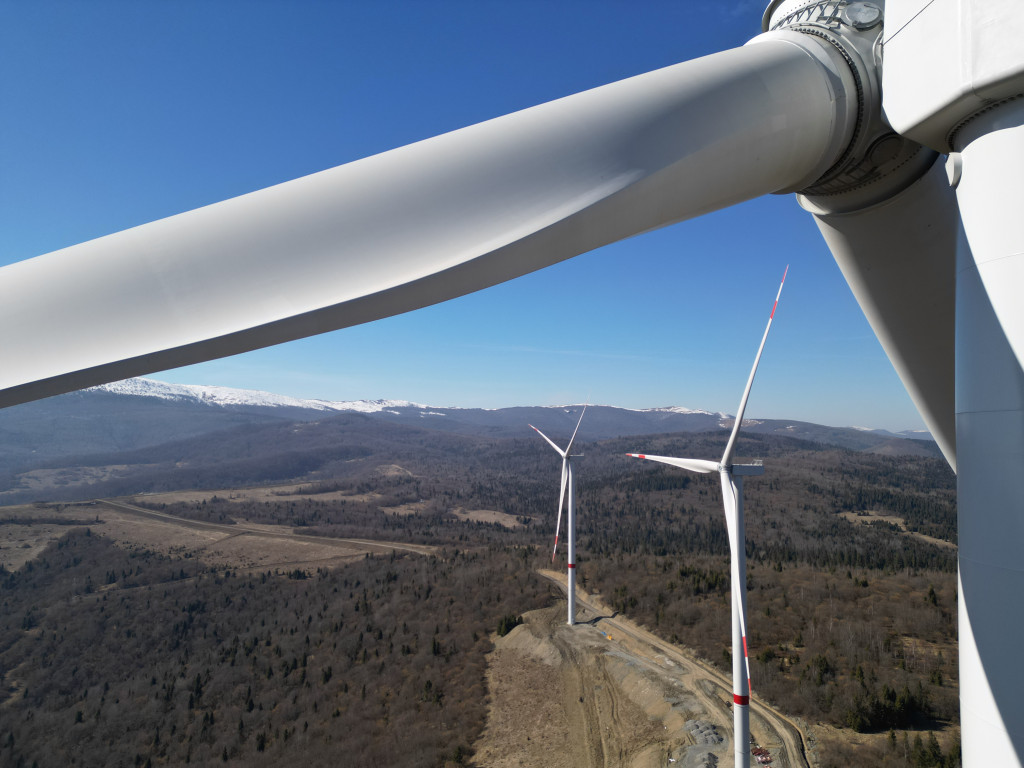
In 2025, around 350 MW of new wind capacity was commissioned in Ukraine — a sharp contrast to just 20 MW in 2024. According to Oleksandr Podprugin, Regional Director of Notus Energy in Ukraine, a year earlier the discussion was about only 20–30 MW that were almost guaranteed to be completed. Reality turned out to be far more optimistic.
Projects emerged across several regions, including Mykolaiv, Lviv, Zakarpattia, and Volyn. At the same time, the industry clearly understands that even these volumes are insufficient to cover the structural generation deficit caused by the destruction of conventional power plants.
The Main Bottleneck Is Not Wind — It’s Capital
For years, the key challenge for wind energy has been the lack of a “bridge” between available capital and actual project construction. Banks and investment funds are willing to invest — but only if credible risk-mitigation instruments are in place.
In 2025, progress became visible in several areas at once:
-
legislative improvements to auction mechanisms, including compensation for investors in case of sharp market price drops;
-
significantly improved communication between the renewable sector and the state;
-
the launch of international de-risking mechanisms under the Ukraine Facility.
The most important signal was the approval of €150 million to establish a dedicated commercial risk-mitigation fund for renewable energy projects. This mechanism is expected to support financing for up to 1 GW of new capacity and could become operational as early as 2026.
Corporate PPAs: A Market That Has Not Yet Fully Emerged — but Is Already Essential
Another critical missing element is the market for long-term corporate power purchase agreements (PPAs). Despite ongoing discussions, Ukraine effectively had no functioning long-term PPA market in 2024–2025.
The problem is straightforward: large industrial consumers want fixed prices and ESG benefits, but are reluctant to commit to long-term contracts amid uncertainty. Banks, in turn, do not finance projects without 10–15-year off-take agreements.
Notus Energy is currently at the final stage of signing one of the first truly long-term corporate off-take contracts with a major industrial consumer. According to Podprugin, the first successful examples could trigger a “lead effect” and unlock the market.
$220 Million in Odesa Region and a Bet on Scale
In January 2026, Notus Energy secured up to $50 million in financing from Horizon Capital via the Catalyst Fund for the construction of its first own wind power plant in Ukraine, with a capacity of 124–125 MW in the Odesa region. The total project cost is estimated at $220 million.
Construction is scheduled to begin in June 2026, with commissioning planned for 2027. The project is insured against war risks with the support of the German government — another important signal of the new investment reality.
Notus Energy’s Ukrainian pipeline includes:
-
a 125 MW wind farm in Odesa region;
-
a 180 MW wind farm in Odesa region (post-2027);
-
a 400 MW wind farm in Kyiv region (no earlier than 2028).
The company’s ambition is to build 1.3 GW of renewable capacity in Ukraine by 2030, potentially placing it among the country’s leading renewable power producers.
War as a Catalyst for Competence
One of the most unexpected outcomes of the war has been technological adaptation. After 2022, most turbine manufacturers significantly limited the presence of their service teams in Ukraine. As a result, wind farms commissioned in 2023–2025 were installed by Ukrainian developers and contractors themselves — strictly following manufacturers’ manuals and guidelines.
This has given Ukraine a unique, Europe-wide rare expertise in full-cycle wind turbine installation. Several Ukrainian companies are now certified to perform such work independently, while OEM service teams are gradually returning.
“The war forced us to learn things that, in peacetime, we would probably not have mastered for many more years,” Podprugin says.
2026 as a Turning Point
Experts expect 2026 to become the first year when three different types of projects move forward simultaneously:
-
completion of wind farms launched in 2024–2025;
-
first projects financed through long-term corporate PPAs;
-
first projects supported by new de-risking mechanisms and potentially updated auction schemes.
Demand for new generation will remain high at least until the end of the decade. Once military risks decrease to an acceptable level, Ukraine’s wind energy sector could rapidly become one of the most attractive investment destinations in Europe.
Become a member of 100 RE UA
Switching to 100% renewable energy in Ukraine is possible!