
Energy-Independent Hospital in Kalush: how the community is strengthening the resilience of medical infrastructure through solar energy
The “Energy-Independent Hospital” project in Kalush became one of the winners of the 100 gREen AWARD-2025, an award that recognises the best implemented green transformation projects in Ukraine. This case was distinguished as an example of how a local community, international partners, and a medical institution can work together to strengthen the energy resilience of critical infrastructure.
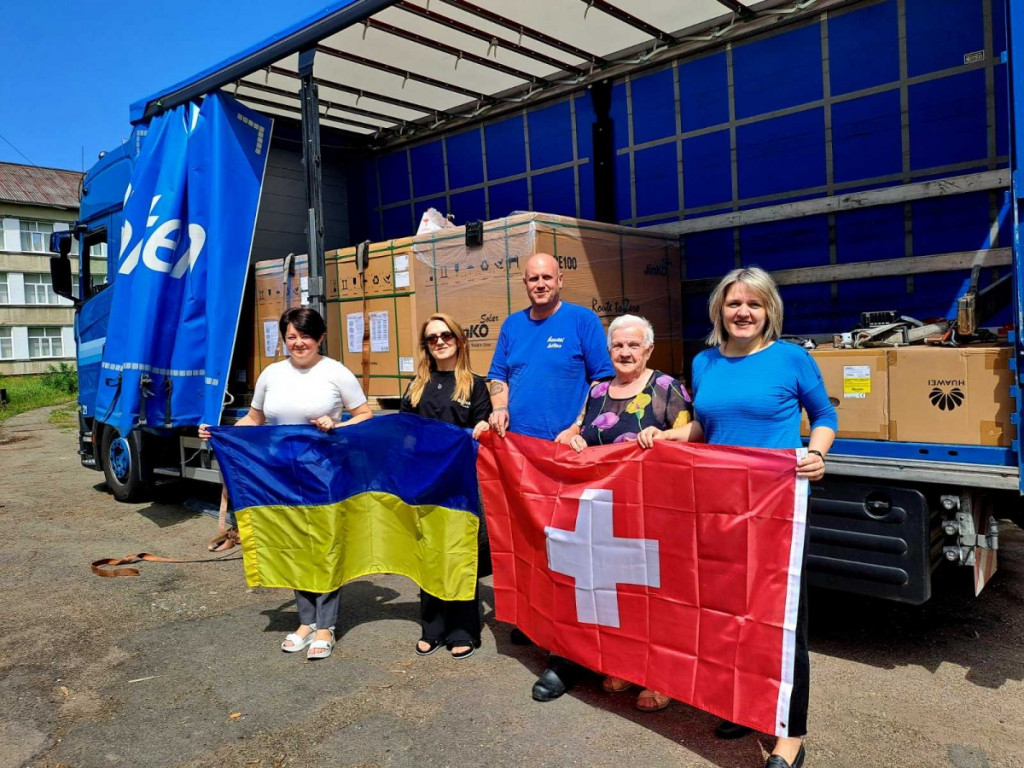
In 2025, the Kalush community began the practical implementation of a project to install a solar power plant at the Kalush Central District Hospital. Its main goal is to reduce the hospital’s dependence on external power supply, lower electricity costs, and improve the reliability of the medical institution’s operation under wartime and energy-related risks. The city council publicly emphasised that for the hospital this means not only savings, but also a more stable and environmentally friendly energy source for its daily work.
It is important that this case did not emerge by chance. In 2025, Kalush was actively strengthening its local energy policy and moving towards systemic solutions in the field of energy efficiency and renewable energy. One of the key practical steps within this logic was the project for the hospital — a critical social infrastructure facility that must operate continuously regardless of external circumstances.
The public story of the project unfolded in stages. In June 2025, the Kalush City Council reported that under a Swiss grant the Kalush Central District Hospital would receive over UAH 1 million for the purchase and installation of solar panels. At that time, it was stated that the project was expected to be completed by the end of October 2025. In July, the community received humanitarian assistance from Switzerland — solar panels and inverters provided by the energy company BKW, which made it possible to equip solar power plants at public sector facilities, including the hospital.
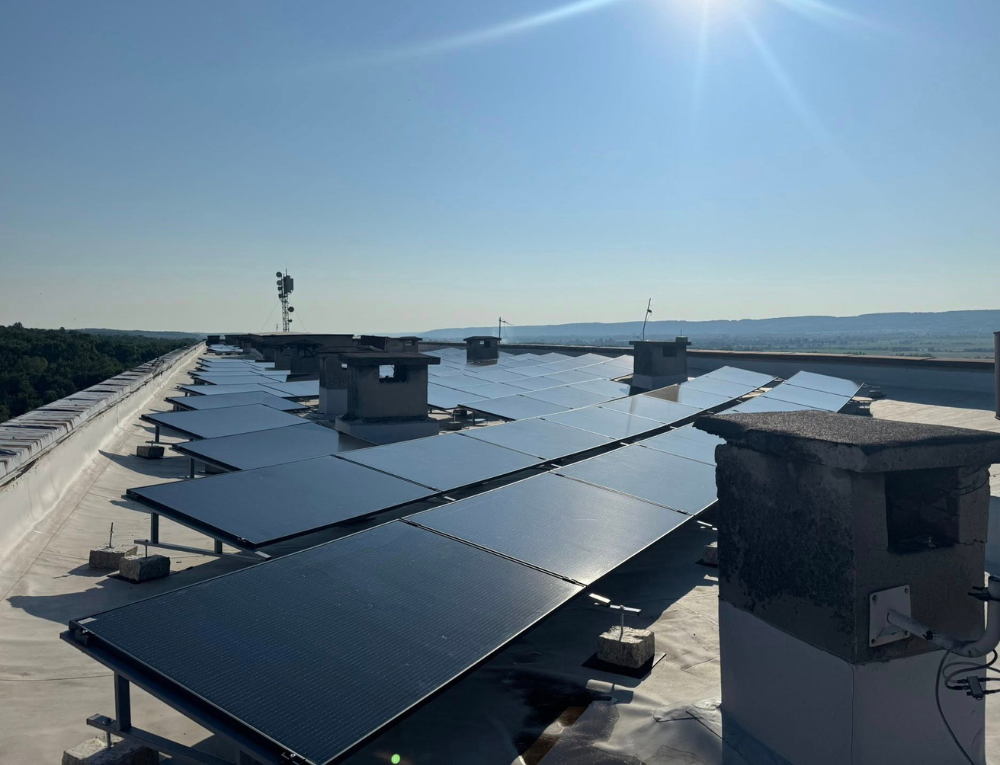
The next step was the actual installation of the equipment. In July 2025, it was reported that the first solar panels with a capacity of about 96–98 kW had already been installed on the roof of the district hospital. This became the first visible stage of the transition from grant support and procurement to a real change in the hospital’s energy model. From that point, the case began to take shape not only as a promising initiative, but as an already implemented infrastructure solution.
By the end of 2025, the city authorities were already speaking about a much larger scale of implementation. As of December, solar panels with a total capacity of about 200 kW had been installed on the roof of the hospital, and one section of the solar power plant with a capacity of 100 kW had already been commissioned and was operating. At the same time, the launch of another section was announced, confirming the phased but consistent logic of implementation. In this way, the hospital is gradually moving from partial use of solar generation to a more comprehensive model of energy supply.
The strength of this case lies in the fact that it is not only about installing panels. The project in Kalush is a story about increasing the resilience of a medical institution in a broader sense. For the hospital, a solar power plant means a lower burden on the budget, more predictable energy consumption, reduced vulnerability to grid disruptions, and a stronger ability of critical infrastructure to operate steadily in times of crisis. In the Ukrainian context, this makes the project much more significant than an ordinary upgrade of a single facility.
Another important aspect is international partnership. The project became possible thanks to the support of Swiss partners, and public statements by the city separately mentioned BKW. This format of cooperation shows that energy independence in Ukrainian communities is increasingly being built through a combination of local initiative, external support, and a clear understanding of which facilities should be prioritised for investment. In this case, a hospital is one of the most obvious and most important priorities.
For Ukraine, this case is highly illustrative. It demonstrates that green transformation in communities is not only about decarbonisation or technological modernisation as such. It is also about ensuring the uninterrupted operation of hospitals, strengthening local resilience, and making critical infrastructure less dependent on external shocks. That is why the project in Kalush is an example of how solar energy becomes a practical instrument of security, resilience, and responsible community development.
Become a member of 100 RE UA
Switching to 100% renewable energy in Ukraine is possible!