
“Solar Water Utilities”: how Energy Act for Ukraine turns solar energy into an instrument of community resilience
The “Solar Water Utilities” project implemented by the Energy Act for Ukraine Foundation became one of the winners of the 100 gREen AWARD-2025 as an example of practical green transformation in critical infrastructure. This case was distinguished as a solution that combines energy security, stable water supply, and the long-term resilience of communities under wartime conditions and constant risks to the energy system.
The Solar Water Utilities initiative is a dedicated area of work of the Energy Act for Ukraine Foundation. Its logic is simple and strategically important at the same time: water utilities belong to critical infrastructure and therefore need solutions that allow them to continue operating even during prolonged power outages. That is why the foundation develops solar generation and energy storage projects for water intake facilities and water supply systems.
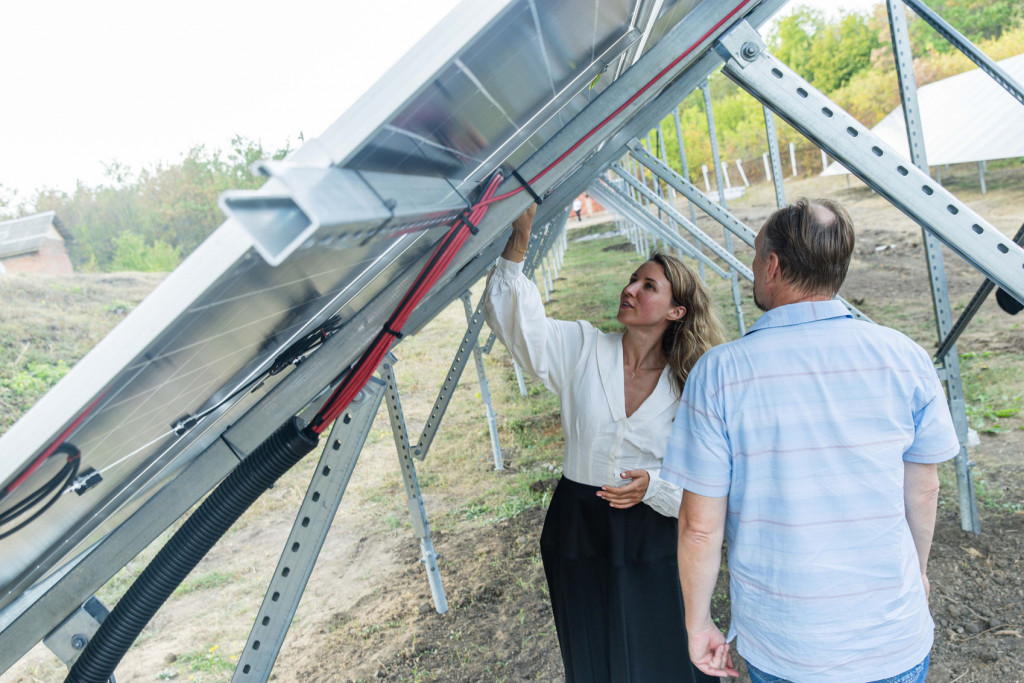
One of the most illustrative examples of this initiative is the hybrid solar power plant installed for a strategic water utility in Kirovohrad region in September 2025. According to the foundation, the station provided energy independence for the water intake facility and uninterrupted water supply for more than 15,000 residents, even during full blackouts. In this case, solar generation became not merely a source of savings, but part of the basic security system of the community.
The technical characteristics of this solution clearly demonstrate its practical value. The station has an installed capacity of 100 kW, an energy storage system of 102.4 kWh, can provide autonomous operation during blackouts for up to 4 hours, and has an expected annual generation of 141.45 MWh. The foundation also states that the annual savings from this solution exceed EUR 24,000, while the reduction of CO₂ emissions over 25 years is estimated at around 44 tonnes.
The context in which this project was implemented is especially telling. In 2024–2025, the community where the station was installed experienced more than 138 water supply interruptions, amounting to 590 hours without water. To keep the pumps operating, the utility had to use diesel generators, consuming 7,840 litres of fuel and spending more than UAH 700,000 from the local budget. Against this background, the transition to a hybrid solar power station became not simply an ecological decision, but a response to a critical infrastructure problem.
At the same time, the project’s effect became visible very quickly. According to Energy Act for Ukraine, already in the first month of operation the new system helped the community save more than UAH 160,000. This is important not only as a financial indicator, but also as proof that solar energy for water utilities can be a fast and practical instrument for increasing resilience.
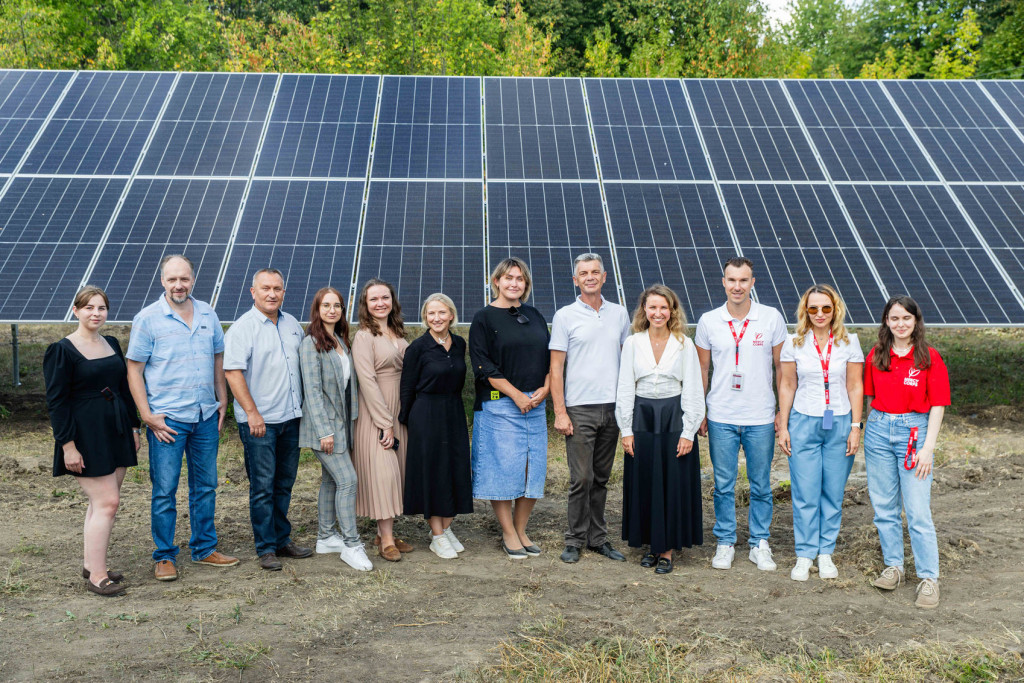
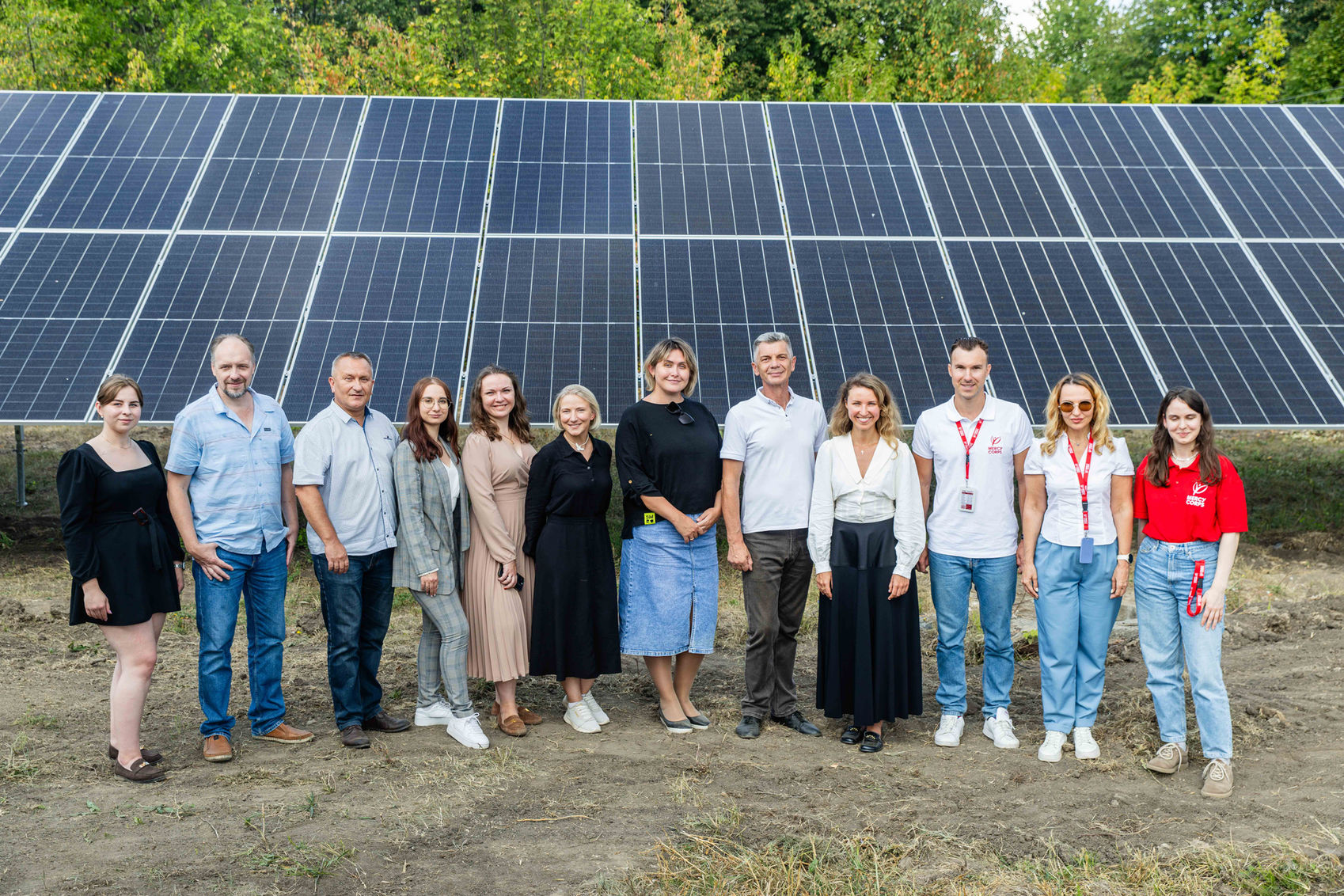
Another strong aspect of the case is the partnership-based implementation model. The project was carried out by the Energy Act for Ukraine Foundation with the support of Mercy Corps, and the foundation has directly stated its intention to expand the geography of the initiative according to the most urgent needs of communities. This means that Solar Water Utilities is not a one-off story, but a model that can be scaled to other settlements and other types of critical infrastructure.
For Ukraine, this project is of particular importance because it demonstrates that green transformation can work not only as a development strategy, but also as a practical mechanism for protecting essential services. Water, like electricity, is one of the foundations of community resilience. That is why Solar Water Utilities is an example of how renewable energy becomes an instrument of security, savings, and reliability in some of the most sensitive sectors of local infrastructure.
Become a member of 100 RE UA
Switching to 100% renewable energy in Ukraine is possible!