Solar Cannibalization Cuts Greek Capture Price to Under 28% of Market Average
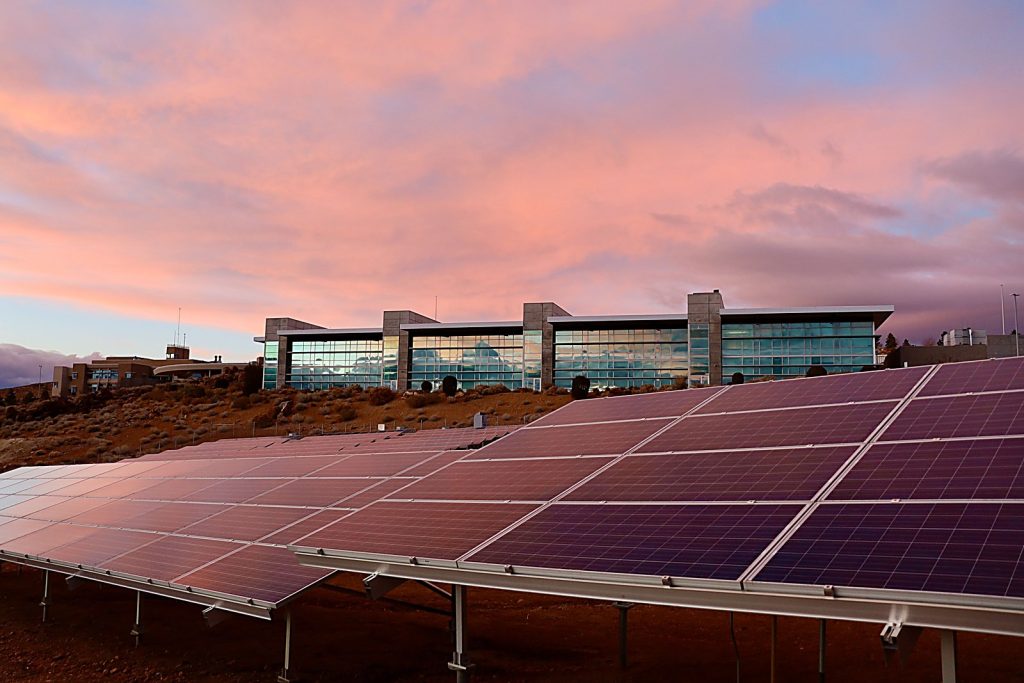
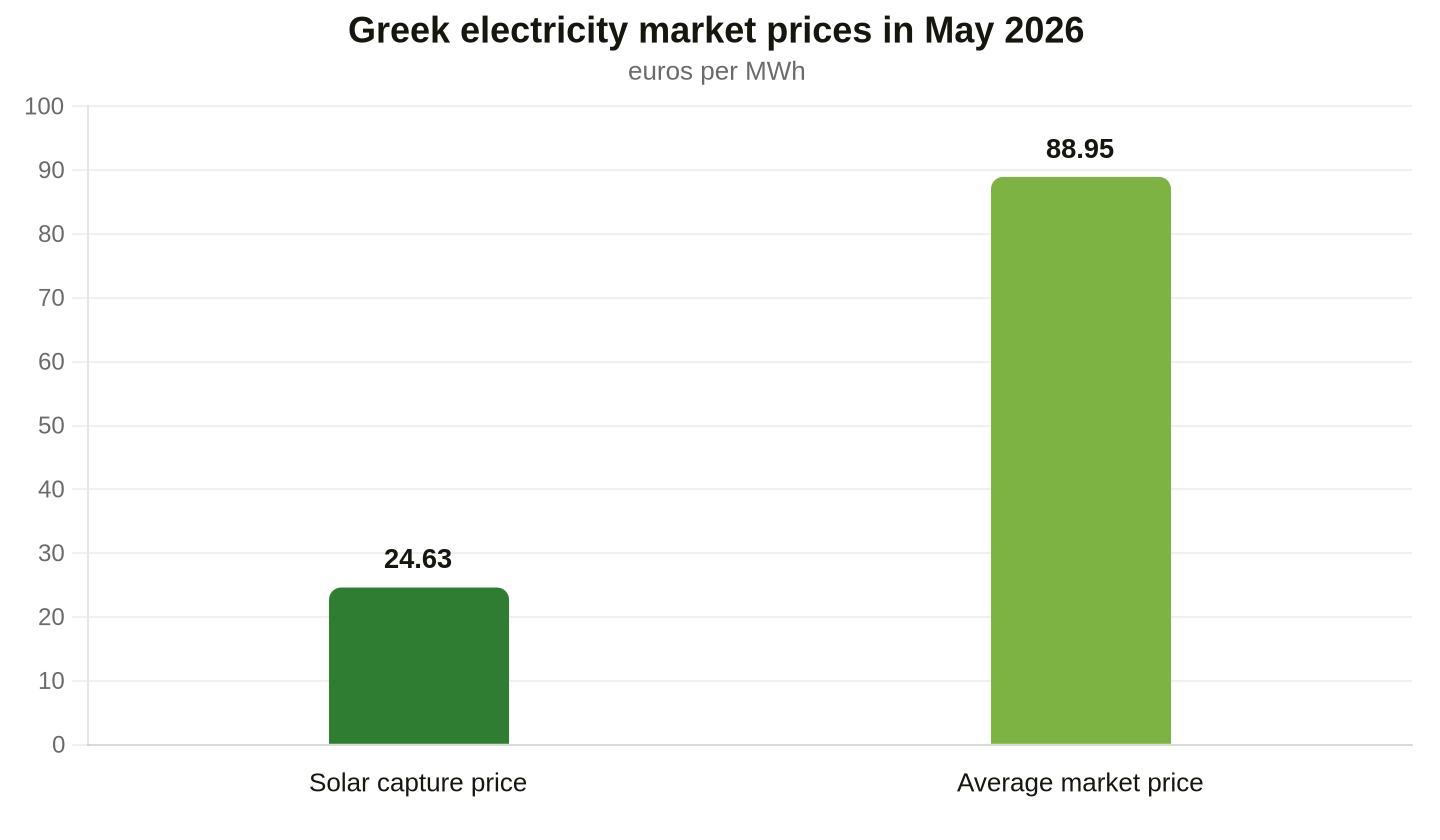
Greek solar farms received just €24.63 per megawatt-hour in May 2026, against an average market price of €88.95 — meaning operators captured less than 28% of the prevailing rate. The figures come from DAPEEP, Greece’s renewable-energy settlement operator, and illustrate how heavily concentrated midday generation is eroding solar revenues across southern Europe.
The mechanism is well understood: when solar output floods the grid during peak daylight hours, spot prices in those windows fall far below the flat baseload average, compressing the weighted return for solar producers. ACER analysts explain the metric as a generation-weighted average selling price which, set against baseload, reveals how much a technology gains or loses from hourly market participation.
The drag has spread unevenly across the continent. Between 2022 and May 2026, Greece and Spain saw solar capture prices fall by more than half, Germany recorded a 35% decline and Poland 30%, while Italy posted a comparatively modest 12% drop. Wind generation was largely insulated by its round-the-clock output profile; in Germany, wind trailed baseload by 17% in 2022 and 11% this year, and in Italy the correlation remained nearly complete throughout.
Battery storage is reshaping the economics. Pexapark platform analysis found that solar projects paired with storage achieved capture prices exceeding baseload by more than 50%, by pushing delivery into higher-priced hours. ACER analysts also identify hybrid power purchase agreements as a mitigation route, since they can shift generation toward more expensive periods and sustain stable output during low-insolation stretches.
Source: Balkan Green Energy News
Become a member of 100 RE UA
Switching to 100% renewable energy in Ukraine is possible!