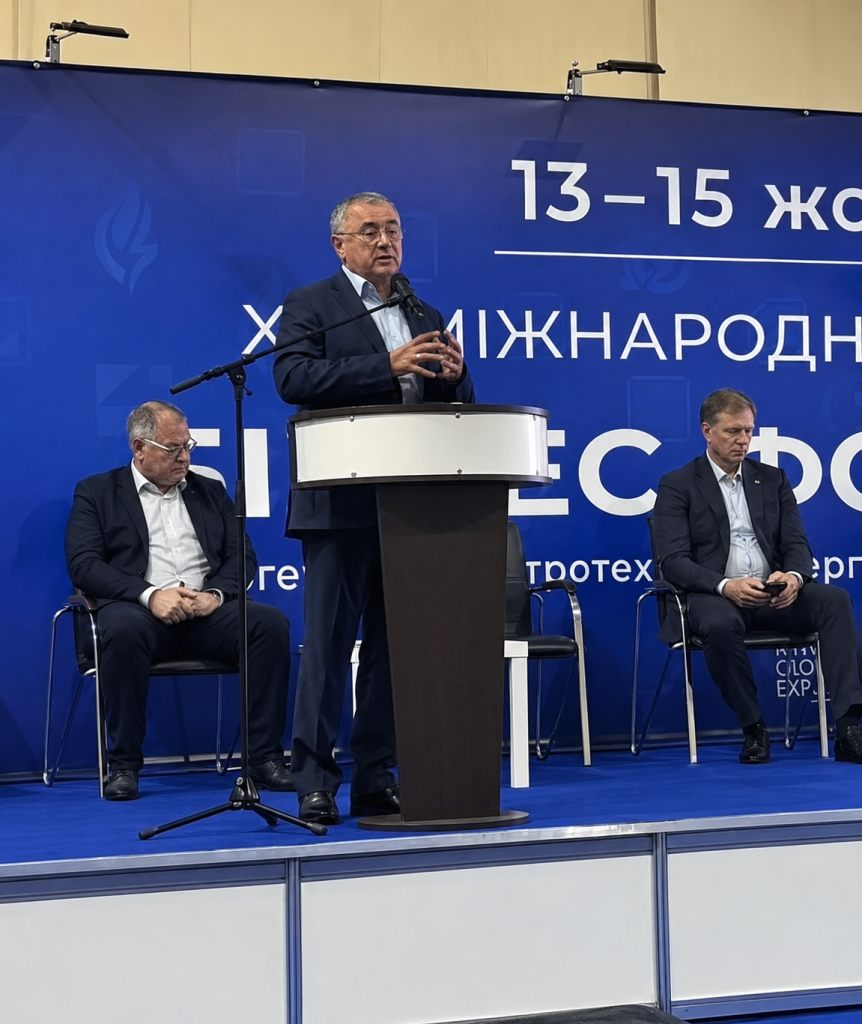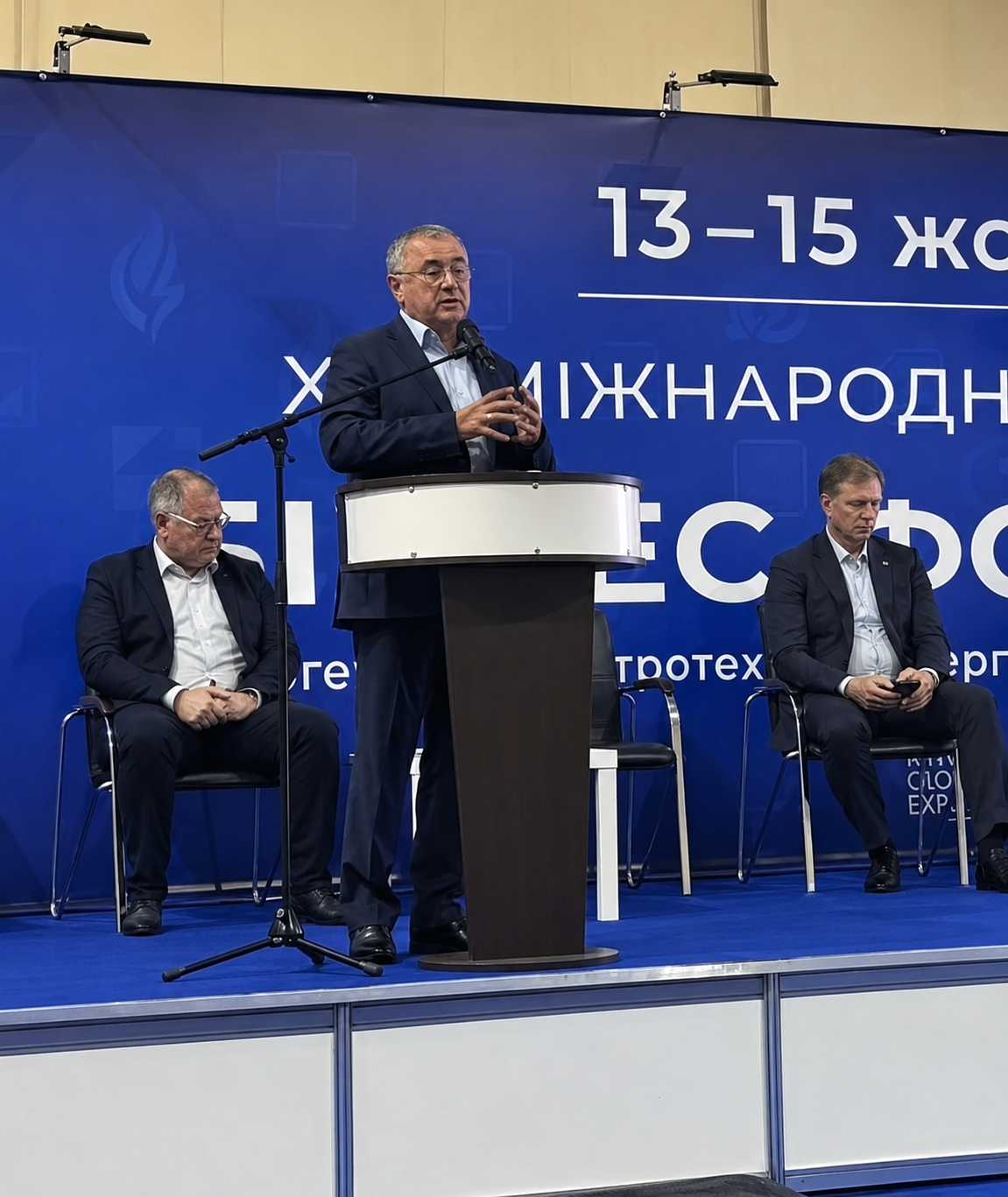
Oleksandr Dombrovskyi, Chairman of the Board of Global 100 RE Ukraine and President of PJSC MHP Eco Energy, delivered a speech at the 11th International Congress of Power Engineers, titled “Ukraine’s Energy System: The Path to Sustainable Development and Investment. Legal Mechanisms. Financial Instruments. Technical Solutions,” held on October 13 in Kyiv as part of the 23rd International Energy Business Forum “5E”.
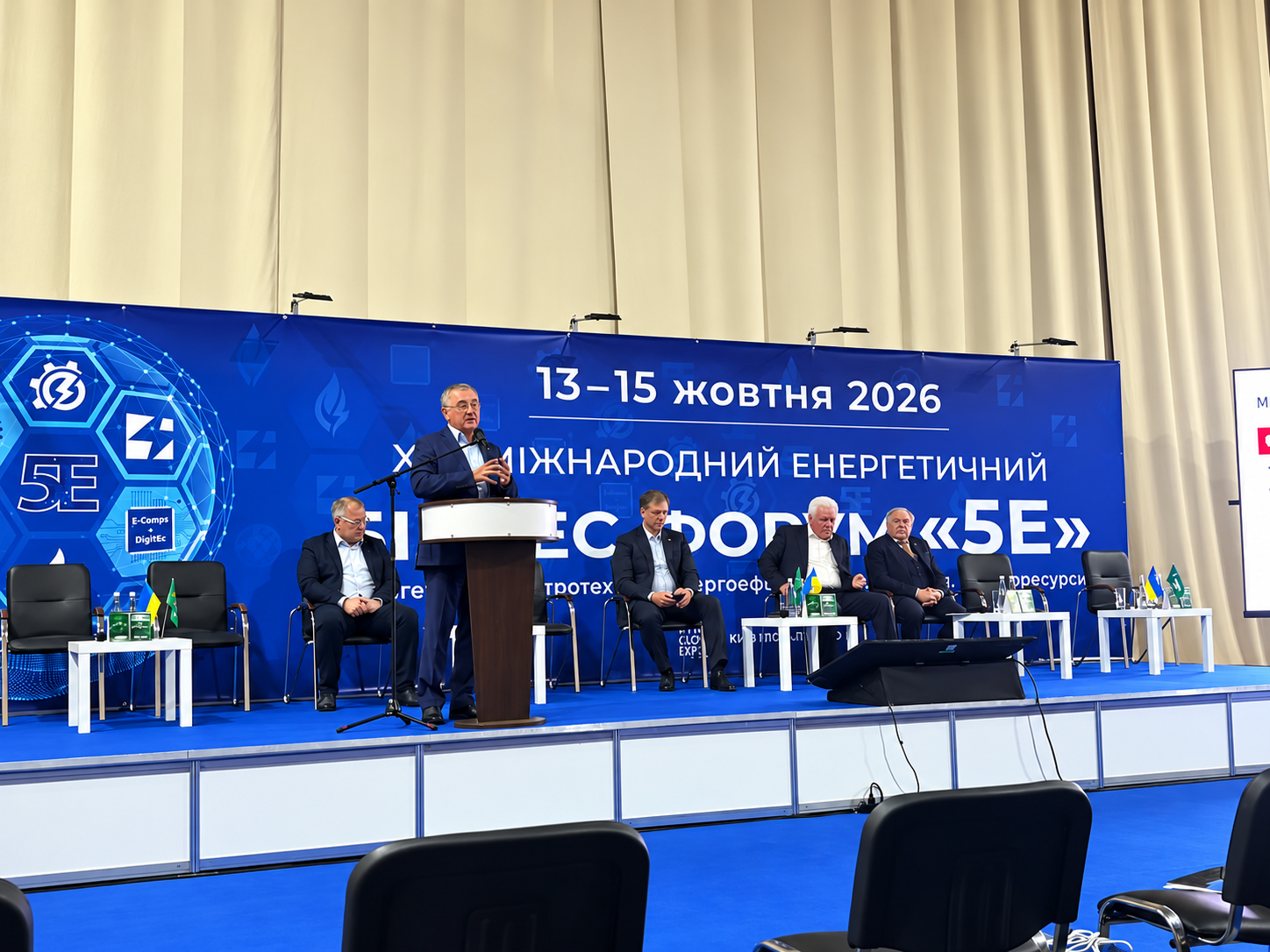
The congress brought together representatives of energy and industrial companies, government authorities, financial institutions, local communities, the expert community, and international partners. Discussions focused on the future architecture of Ukraine’s energy system, attracting investment, developing distributed generation and energy storage, grid digitalization, and technological solutions to enhance system resilience.
Oleksandr Dombrovskyi delivered a presentation titled “War, Ceasefire, Peace?! Strategic Models for Ukraine’s Energy Security,” outlining three potential scenarios for the development of Ukraine’s energy system: continued war, a fragile ceasefire, and long-term peace. Each scenario requires a distinct approach to designing the country’s energy architecture.
The central message of his presentation was that energy security can no longer be assessed solely on the basis of the cost per kilowatt-hour. The war has fundamentally changed the understanding of energy system resilience, placing increasing importance on the location of generation facilities, their physical protection, operational autonomy, and ability to recover rapidly from attacks.
Three Scenarios, Three Energy Models
Under the continued-war scenario, the priority should be Defense & Islanding: islandable microgrids, greater energy autonomy for local communities and critical facilities, mobile power generation units, and localized energy storage systems serving hospitals, water utilities, and other critical infrastructure.
In the event of a fragile ceasefire, the focus should shift toward a protected, distributed energy system, Smart Grid clusters, fast-response energy storage, municipal and agricultural-industrial combined heat and power (CHP) generation, and the gradual return of private capital.
In the long term, Ukraine’s energy sector should transition toward an Integration & Net-Zero model, encompassing deeper integration with ENTSO-E, digital balancing markets, utility-scale energy storage, large-scale solar and wind power generation, corporate power purchase agreements (PPAs), and exports of green electricity to the European Union.
Rebuilding Differently, Not Simply Restoring What Existed Before
Oleksandr Dombrovskyi placed particular emphasis on the need to move away from the excessively centralized energy system model of the past.
The experience of the war has exposed the critical vulnerability of large power plants and high-voltage transmission substations, particularly when a substantial share of the system’s capacity is concentrated in a limited number of facilities. Reconstructing the pre-war configuration without fundamental changes could therefore leave Ukraine’s energy sector strategically vulnerable even after the war ends.
This argument emerged as one of the recurring themes of the congress. Participants emphasized that Ukraine’s post-war energy system should not simply replicate its pre-war structure. Instead, reconstruction must go hand in hand with technological transformation, decentralization, digitalization, and the introduction of new market mechanisms.
Bioenergy as a Foundation for Decentralization
According to the model presented by Oleksandr Dombrovskyi, biogas and biomethane should play a particularly important role in Ukraine’s future energy architecture.
During wartime, biogas facilities can support the operation of local energy islands. During a ceasefire, they can supply biomethane to gas distribution networks, while under conditions of long-term peace, they can contribute to Ukraine’s energy export potential.
A major advantage of these technologies is their ability to operate around the clock, regardless of weather conditions, while utilizing locally available agricultural feedstocks.
A Fragile Ceasefire: The Most Challenging Scenario
Particular attention was given to the possibility of a fragile ceasefire. According to Oleksandr Dombrovskyi, this scenario could prove the most challenging in terms of attracting investment and developing new energy projects.
During such a period, relying exclusively on non-repayable donor funding would become increasingly difficult, while military and political risks would remain too high for conventional private investment to return at scale.
Consequently, essential instruments would include war and political risk insurance, cooperation with international financial institutions, and joint projects with European energy system operators.
Ukraine’s Experience Could Become Valuable for Europe
Oleksandr Dombrovskyi also emphasized that Ukraine is effectively developing unique expertise in building a distributed energy system under conditions of persistent threats.
While Western European countries are transitioning toward decentralized renewable energy generation primarily to achieve climate objectives, Ukraine is compelled to pursue this transformation first and foremost to ensure physical security and the survival of its energy system. In the longer term, this experience could become an important Ukrainian contribution to European energy security.
“Security is determined by the architecture of the system, not merely by the cost per kilowatt-hour,” was one of the key takeaways from Oleksandr Dombrovskyi’s presentation.
Decentralization, distributed generation, energy storage, and bioenergy must remain integral components of Ukraine’s energy model, regardless of how the situation develops in the future.
Become a member of 100 RE UA
Switching to 100% renewable energy in Ukraine is possible!