Ukraine’s Biomass Sector Needs Rules, Not More Land, UABIO Chief Says
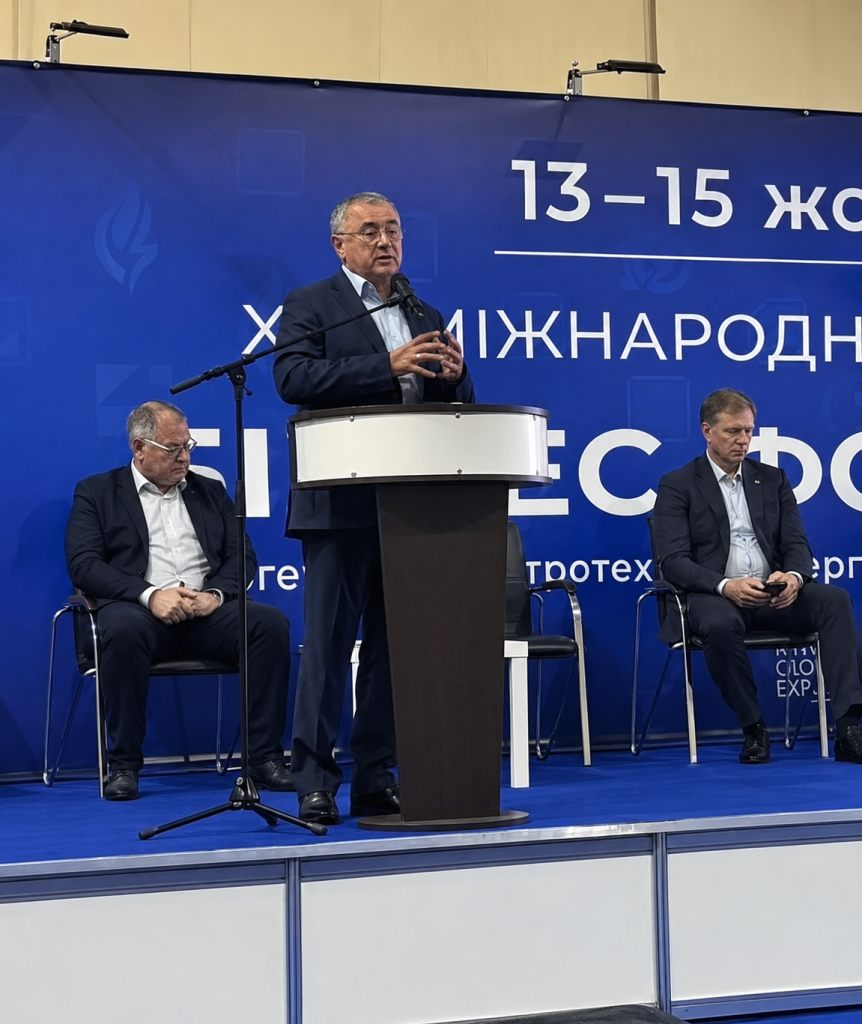
Ukraine’s bioenergy industry has the raw resources to compete in European markets — what it lacks are the legal frameworks to unlock them. That was the central message from Georgy Geletukha, chair of the Ukrainian Bioenergy Association (UABIO), speaking at a conference of the Institute of Technical Thermophysics of the National Academy of Sciences of Ukraine.
Geletukha outlined four niches where EU regulation now rewards biomass at a premium, treating it as carbon, an ecosystem service, and a material: cover crops for biomethane production; degraded land converted for biomethane and aviation fuel; protective buffer strips for water and soil; and lignocellulose for construction and biochar. Ukraine holds an estimated 10–12 million hectares of degraded soils and 440,000 hectares of shelterbelts — figures that exceed comparable EU totals. He argued that the necessary laws and standards could realistically be drafted within two to three years.
UABIO expert Semen Dragnev examined the economics of harvesting intermediate crops classified under Annex IX of the EU’s Renewable Energy Directive. For a collection radius within 10 kilometres, a forage-harvester scheme is optimal, with feedstock costs at the digester inlet reaching 105.4 euros per tonne of dry matter for winter rye and 133.8 euros for a vetch-oat mix. Diesel use accounts for 7.3–9.0% of the resulting biomethane energy, with transport claiming 41–48% of that. Bigger savings, he noted, come from shorter haul distances, reduced storage losses, and careful variety and sowing-time selection — not from changing equipment.
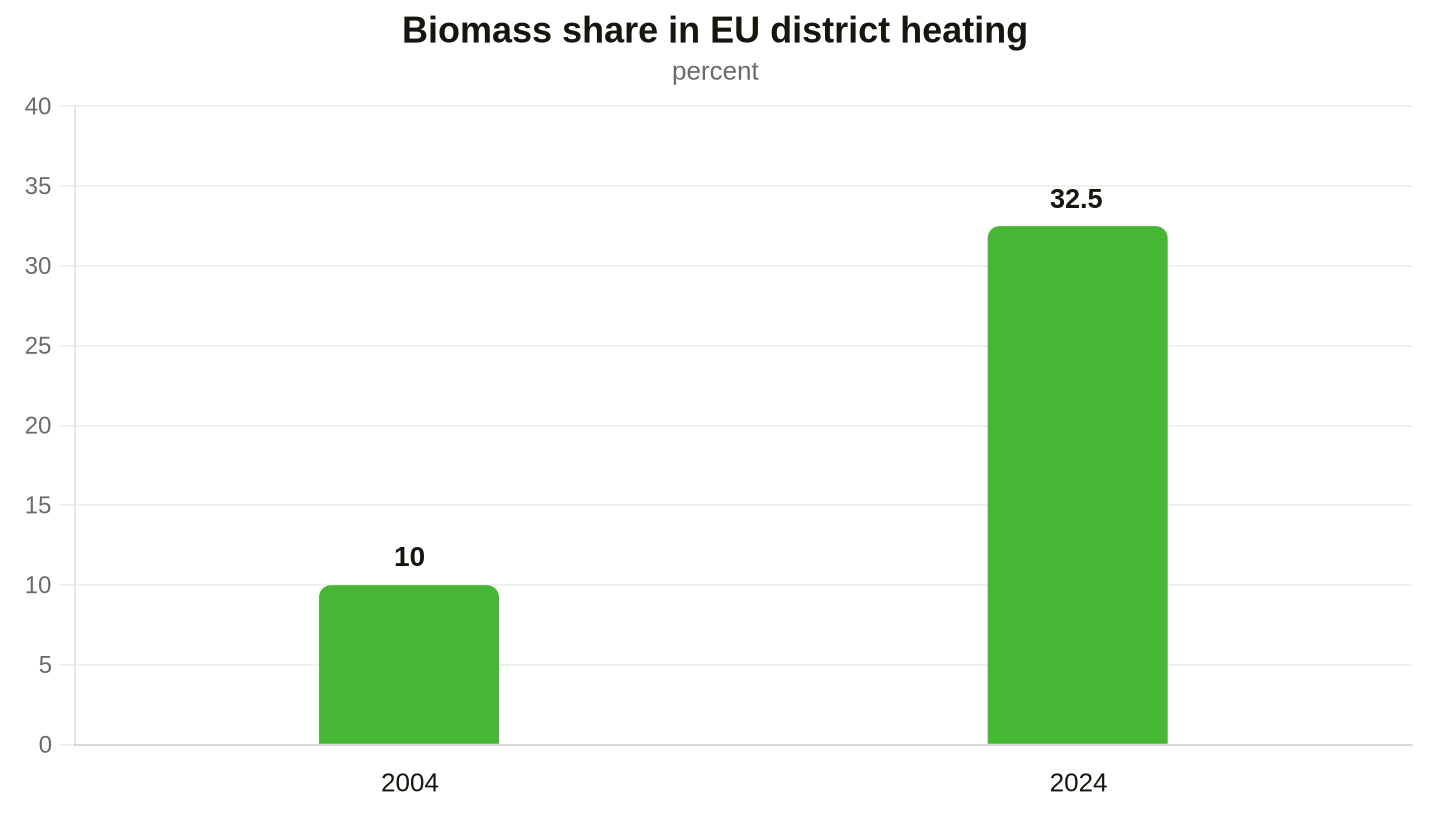
UABIO expert Tetyana Zhelezna highlighted a milestone in EU district heating: in 2024, renewables and waste heat combined reached 46.2% of supply, narrowly overtaking fossil fuels at 45.9% for the first time. Denmark, Sweden, Lithuania, and Finland led the transition. She sees the sector’s future in hybrid systems that pair biomass with heat pumps, waste heat recovery, and thermal storage.
Source: UABIO
Become a member of 100 RE UA
Switching to 100% renewable energy in Ukraine is possible!