Home Battery Storage Is Becoming the US Solar Default, Study Finds
The share of new US residential solar installations paired with a battery system climbed from 25 percent in 2024 to 37 percent in 2025, according to Lawrence Berkeley National Laboratory data drawn from roughly 450,000 systems installed over the year. The figures point to a fast-moving transition in which home storage is evolving from an optional add-on into a baseline expectation for rooftop solar buyers.
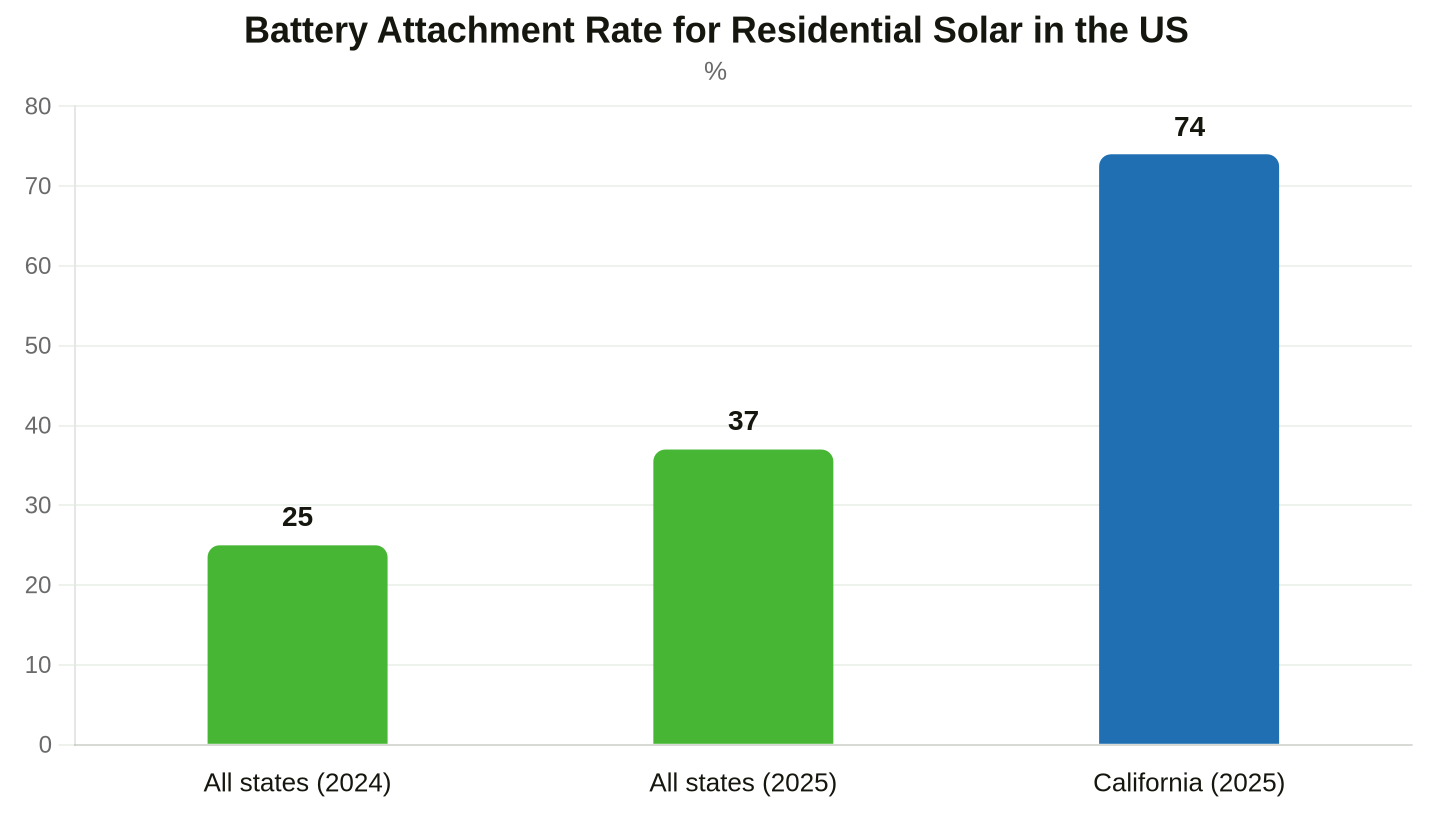
California has been one of the main drivers of that shift. After the state introduced NEM 3.0 tariffs, selling surplus power to the grid during daylight hours became far less financially attractive, prompting homeowners to store their midday generation for evening use instead. The state’s battery attachment rate rose from 58 percent to 74 percent in a single year.
Growth is spreading well beyond California, however. In the rest of the country the pairing rate more than doubled, rising from 7 percent to 17 percent over the same period, with particularly strong momentum recorded in Arizona and Texas.
Median home battery capacity held steady at 13.5 kWh, but the ability to deliver that energy quickly improved significantly: median discharge power jumped from 6 kW to 11.4 kW. The laboratory’s report attributes that increase to the broad market penetration of the Tesla Powerwall 3.
Source: PV Magazine
Become a member of 100 RE UA
Switching to 100% renewable energy in Ukraine is possible!